
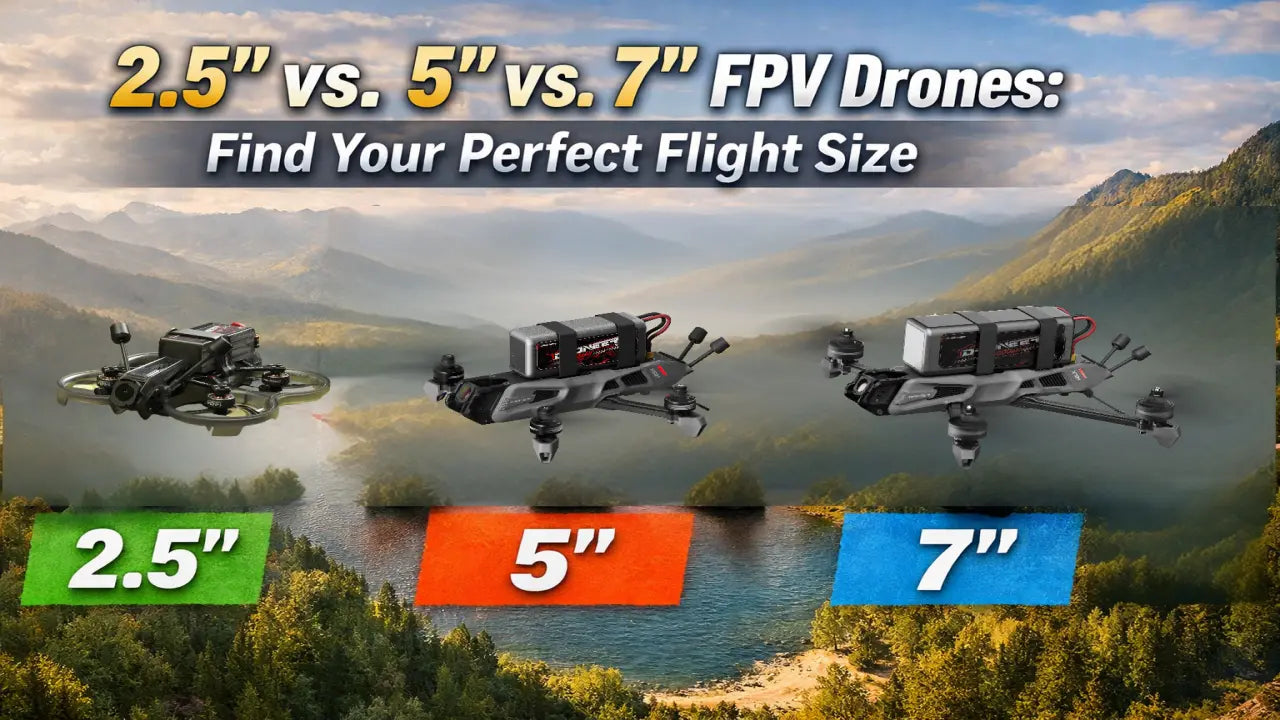
When purchasing an FPV drone, you are often presented with a variety of sizes to choose from, with 2.5-inch, 5-inch, and 7-inch models being the most common. These FPV drone sizes are defined by the diameter of their propellers. Different sizes directly impact flight performance, including speed, stability, and endurance.
What are the pros and cons of different-sized FPV drones, and which ones suit different pilots best? As consumers, how should we choose and purchase them? Let's explore this together today!
2.5-Inch FPV Drone: A Lightweight and Agile Micro Option
2.5-inch FPV drones fall under the Micro FPV category, typically equipped with 2.5-inch propellers. Their compact size and lightweight design make them ideal for flying in confined spaces. Compared to 5-inch or 7-inch drones, these models prioritize agility, safety, and portability, making them highly popular among FPV beginners and casual enthusiasts.
Key Advantages of a 2.5-Inch FPV Drone
1. Compact Size for Easy Portability
The most notable feature of 2.5-inch FPV drones is their compact size and lightweight design. Most 2.5-inch FPV drones weigh less than 250 grams, making them easy to carry in a bag when traveling. They also comply with legal regulations, eliminating the need for cumbersome registration procedures.
For frequent travelers or players who want to practice flying anytime, this compact drone is incredibly convenient.

2.5-Inch FPV Drones Easy Portability
2. Better Suited for Flying in Confined Spaces
Thanks to their compact airframes and agile handling, these drones can fly with ease in confined spaces—such as indoors, in neighborhood parks, or within warehouses. In these complex environments, 2.5-inch FPV drones can navigate freely, making them ideal for practicing fundamental FPV flight maneuvers.
3. Safe Flight, Low Noise
2.5-inch FPV drones feature compact propellers and a small overall size, and they fly at relatively low speeds. This ensures safety during flight, as it reduces the likelihood of crashes caused by high-speed collisions. Additionally, the 2.5-inch propellers generate minimal noise during flight, making them ideal for flying in quiet indoor environments.
Limitations of 2.5-Inch FPV Drones
Although 2.5-inch FPV drones have many advantages, they also have some limitations, which are inevitable:
- Limited power and speed: The power system of a 2.5-inch FPV drone is relatively compact to maintain its advantages of low weight and small size, but this also makes it unsuitable for high-speed racing scenarios.
- Short battery life: 2.5-inch FPV drones typically have a flight time of 5 to 8 minutes, making them unsuitable for pilots who require long-distance flight capabilities.
- Low wind resistance: In strong wind conditions, flight stability is relatively poor.
2.5-Inch FPV Drones: Who Are They For?
After analyzing the advantages and limitations of this size of FPV drone, we can conclude that 2.5-inch FPV drones are better suited for the following groups of people:
- FPV Beginner
- Players with requirements for indoor or small-space flight and photography
- Consumers who prefer portable FPV drones
2.5-inch FPV drones are ideal for use in tight indoor spaces
Recommended Droneer 2.5-Inch Models
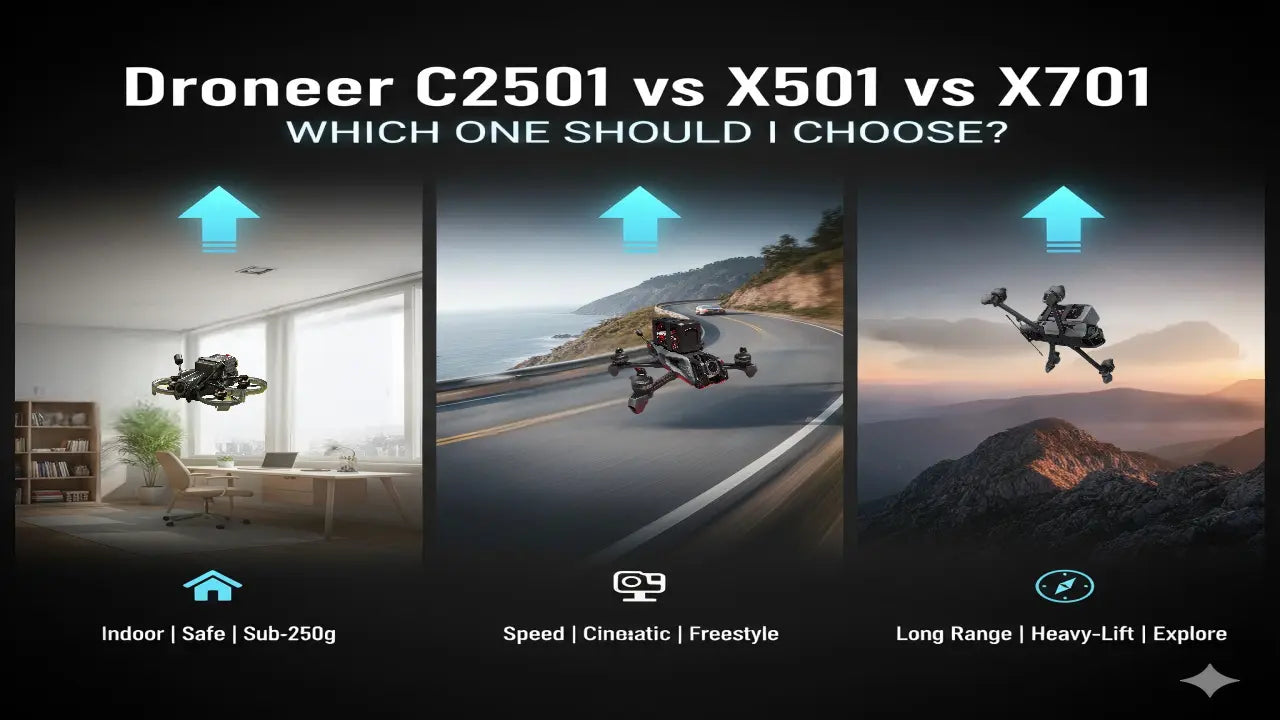
In the 2.5-inch category, the Droneer C2501 is a standout FPV drone. It features a classic Cinewhoop design:
- Full-enclosure protection: The robust, injection-molded propeller guards not only shield the propellers but also ensure exceptional safety during close-range follow-cam shots—such as filming skateboarding sessions or navigating indoor spaces.
- Smooth Power Delivery: The Droneer C2501 offers optimized handling at low speeds and can be equipped with the optional DJI O4 Pro video transmission module, delivering stable 4K footage—making it a productivity tool for indoor “single-take” filming.
- Portability: Compact enough to slip directly into a standard commuter backpack, it allows you to capture stunning aerial perspectives anytime, anywhere.
5-Inch FPV Drones: The Premier Choice for Freestyle Racing
A 5-inch FPV drone refers to a drone with 5-inch propellers. This category falls under the mid-size FPV class and represents the most common and classic type of drone in the FPV sector. This size is generally considered to offer the best balance of performance, speed, and maneuverability, making it extremely popular for both freestyle and racing.
Key Advantages of a 5-Inch FPV Drone
1. A Balance of Speed and Power
While a 5-inch FPV drone is heavier than its 2.5-inch counterpart, it features a significantly more powerful propulsion system. Its 5-inch propellers generate substantial thrust, enabling high-speed flight; simultaneously, it retains sufficient agility to execute a wide variety of acrobatic maneuvers. Consequently, it is ideally suited for both FPV freestyle stunts and racing applications.
2. Good Flight Stability
Compared to smaller FPV drones, 5-inch models feature larger propellers and more powerful propulsion systems, offering better stability and wind resistance during outdoor flights, as well as a smoother flying experience.
The 5-inch FPV drone strikes a balance between speed and stability.
3. Extremely High Scalability
5-inch FPV drones have a wide range of applications. They are not only suitable for acrobatic flying and racing competitions but can also be used for cinematic aerial photography. Equipped with the O4 Pro video transmission system, they can stream 4K video directly.
4. Low Maintenance Costs and Abundant Spare Parts
5-inch FPV drones are a very common and mainstream size on the market. This means it’s easier to find replacement parts for repairs if your drone breaks. Additionally, whether you need motors, ESCs, or propellers, they’re all readily available, making it easier for DIY enthusiasts to upgrade and modify their drones.
Limitations of 5-Inch FPV Drones
- Challenging for beginners: 5-inch FPV drones are fast and powerful; for beginners, they are prone to accidents during operation—potentially resulting in crashes or damage—and are therefore not particularly suitable for practice.
- Space and venue are limited: An FPV drone of this size is not suitable for flying in crowded or confined spaces; you must find an open area.
- Limited battery life: 5-inch FPV drones are powerful, but they also consume battery power rapidly, making them less suitable for long-distance cruising and aerial photography.
5-Inch FPV Drones: Who Should Fly Them?
- Enthusiasts with some FPV flight experience
- Advanced Player
- Creators who pursue dynamic visuals
Recommended Droneer 5-Inch Models
The Droneer X501 is the flagship drone in Droneer’s 5-inch FPV series. It offers the following powerful features:
-
True 5-Inch Versatility
The “Goldilocks” of FPV drones—large enough to easily mount a full-size GoPro, yet agile enough to perform spins, flips, dives, and other acrobatic maneuvers while navigating the narrowest gaps. It has become the industry standard for cinematic-quality follow-cam footage.
-
Analog-Digital Video Transmission Compatibility
The Doneer X501 supports ultra-low latency analog video transmission or ultra-high-definition digital video transmission. Designed for seamless integration with the latest digital FPV systems, it delivers ultra-low latency video feeds, making you feel like you're right in the cockpit even when flying at 180 km/h.
-
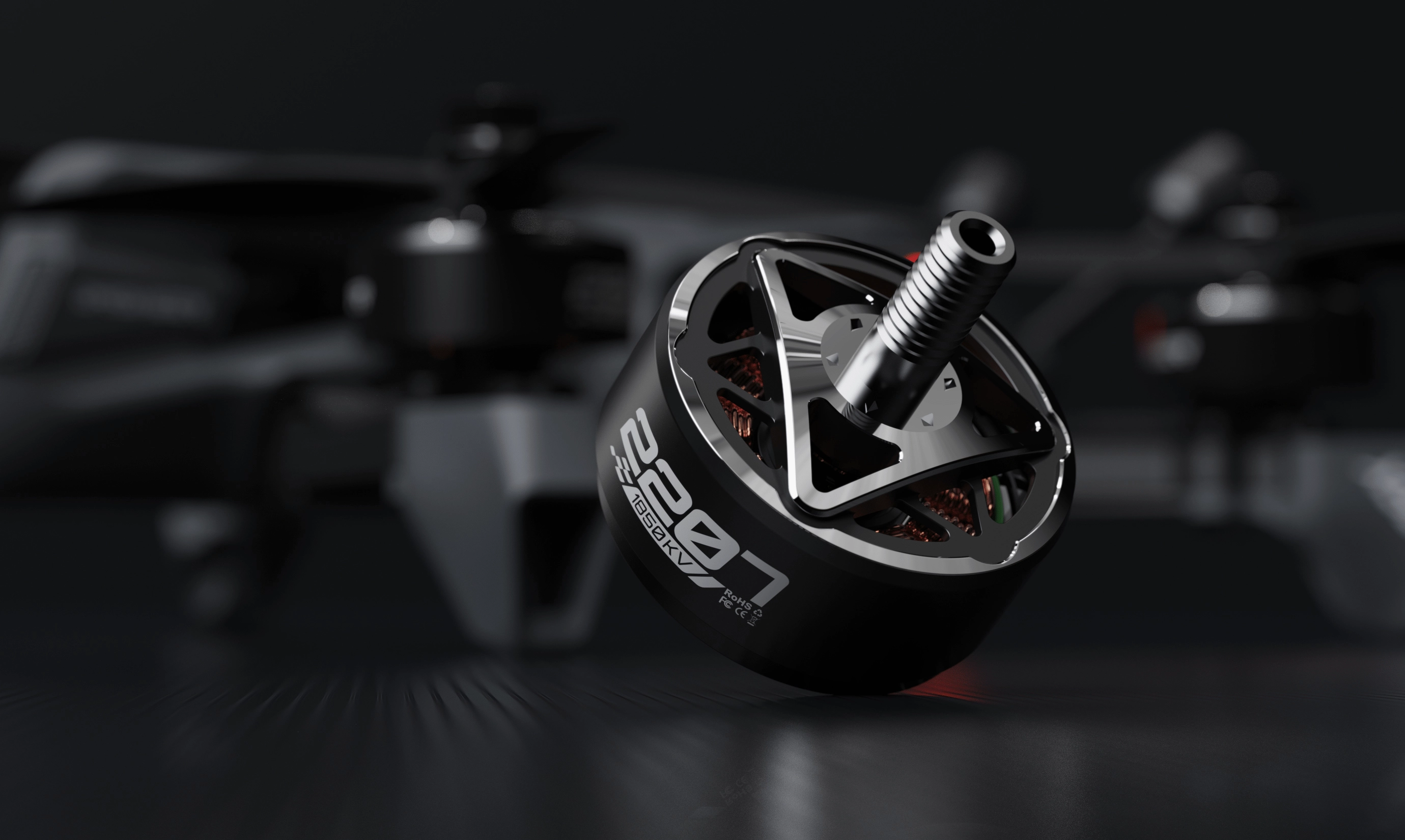
Aggressive Propulsion System
Equipped with high-performance motors and an optimized 6S power system, the X501 offers a thrust-to-weight ratio that redefines "fast." Experience instant throttle response and unmatched wind resistance.
7-Inch FPV Drones: The Best Choice for Long-Range Flying
7-inch FPV drones are typically designed for long-range flight and stable aerial photography. Equipped with larger propellers and more efficient power systems, they offer longer flight times and greater flight stability.
Key Advantages of a 7-Inch FPV Drone
1. Long Battery Life
This 7-inch FPV drone is equipped with larger propellers and a more efficient power system, ensuring extended flight times and longer ranges, making it ideal for applications such as long-distance cruising and aerial photography.
2. Excellent Wind Resistance
Thanks to its large wheelbase and high inertia, it maintains exceptional image stability—even when facing the turbulence of high mountains and valleys or strong sea winds—without exhibiting the frequent shaking typical of smaller aircraft.
3. Powerful Load-Bearing Capacity
Equipped with large 7-inch propellers and a high-capacity battery, this drone is capable of carrying professional photography equipment—such as GoPro, Action, and Insta360 cameras—enabling it to meet the diverse stylistic requirements of filming in various scenarios.
Limitations of 7-Inch FPV Drones
- Not suitable for flying in confined spaces: Much like 5-inch FPV drones, 7-inch models are relatively large in size and lack agility; consequently, they are unsuitable for flight in confined spaces—such as indoors—as they are prone to causing damage.。
- Not suitable for aerobatic flight: It is relatively heavy and large, making it unsuitable for aerobatics and other tricks, as well as for high-speed flight close to the ground.
- Relatively high cost: Compared to 2.5-inch and 5-inch FPV drones, 7-inch drones tend to be more expensive, as the costs of high-capacity batteries, ESCs, flight controllers, and other components are also higher; they are therefore better suited for enthusiasts with a larger budget.
Who Are 7-Inch FPV Drones Best For?
- Long-range flight enthusiasts
- Professional aerial photographer
- Pilots who enjoy flying in challenging environments
The 7-inch FPV drone takes you on a journey to distant places
Recommended Droneer 7-Inch Models
The Droneer X701, part of Droneer’s Long-Range Series of FPV drones, features a 7-inch display. Equipped with an ultra-high-definition flight control system and a dual-redundancy design, it offers the following advantages:
- Achieve 4K HD Aerial Photography: The Droneer X701 offers an optional O4 Pro image transmission system, enabling direct output of high-definition imagery and meeting the requirements for long-range image transmission.
- High load capacity: Compatible with a variety of cameras, including GoPro, Action, and Insta360, to meet 80% of everyday sports photography needs
- Equipped with a GPS module: GPS modules play a crucial role in long-range flights, providing the drone with position, speed, and navigation data, thereby significantly enhancing flight safety and controllability.
- Capable of long-duration flight: The Droneer X701 supports an extended flight duration of 28 minutes, ensuring it can fly greater distances—allowing you to capture views of more distant landscapes and satisfying your long-range cruising needs.
2.5" vs. 5" vs. 7" FPV Drones: Performance Comparison
In the previous section, we provided a detailed overview of the advantages, limitations, and target users for FPV drones in three different sizes. So, how do they compare side by side? The table below will help you quickly understand the key differences between them.
| Comparison Category | 2.5" FPV Drone | 5" FPV Drone | 7" FPV Drone |
| Propeller Size | 2.5 inches | 5 inches | 7 inches |
| Primary Use | Indoor flying, practice, light recreation | Freestyle acrobatics, FPV racing | Long-distance flying, aerial photography |
| Flight Speed | Slow | Very fast | Moderate |
| Maneuverability | High | Very high | Moderate |
| Flight Time | 5–8 minutes | 6–15 minutes | 10–20 minutes |
| Wind Resistance | Weak | Moderate | Strong |
| Portability | Very convenient | Average | Bulky, not very portable |
| Payload Capacity | Low | Moderate | High |
| Recommended Audience | FPV beginners, indoor flying enthusiasts | Advanced players, freestyle and racing pilots | Long-range pilots, aerial photography creators |
How to Choose the Right FPV Size for You
- Choose the 2.5-inch FPV Drone: If you are a beginner who has never flown a drone before, it is recommended that you prioritize a 2.5-inch FPV drone. Additionally, if you intend to use the drone for aerial filming in confined spaces—such as warehouses or indoors—this is also the size you should choose.
- Choose the 5-inch FPV Drone: If you enjoy freestyle and racing and have some basic flying experience, we recommend going with a 5-inch model.
- Choose the 7-inch FPV Drone: If you're planning a long-distance flight or a photography mission and want to fly farther and more steadily, we recommend choosing the 7-inch model.
Conclusion
In FPV drones, sizes such as 2.5-inch, 5-inch, or 7-inch refer to the diameter of the propellers, not the overall size of the drone frame.There is no such thing as the “best” size for an FPV drone—only the size that best suits your needs. Different sizes of FPV drones each have their own unique features, so simply choose the size that best fits your flying style and intended use.

Leave a comment
This site is protected by hCaptcha and the hCaptcha Privacy Policy and Terms of Service apply.