
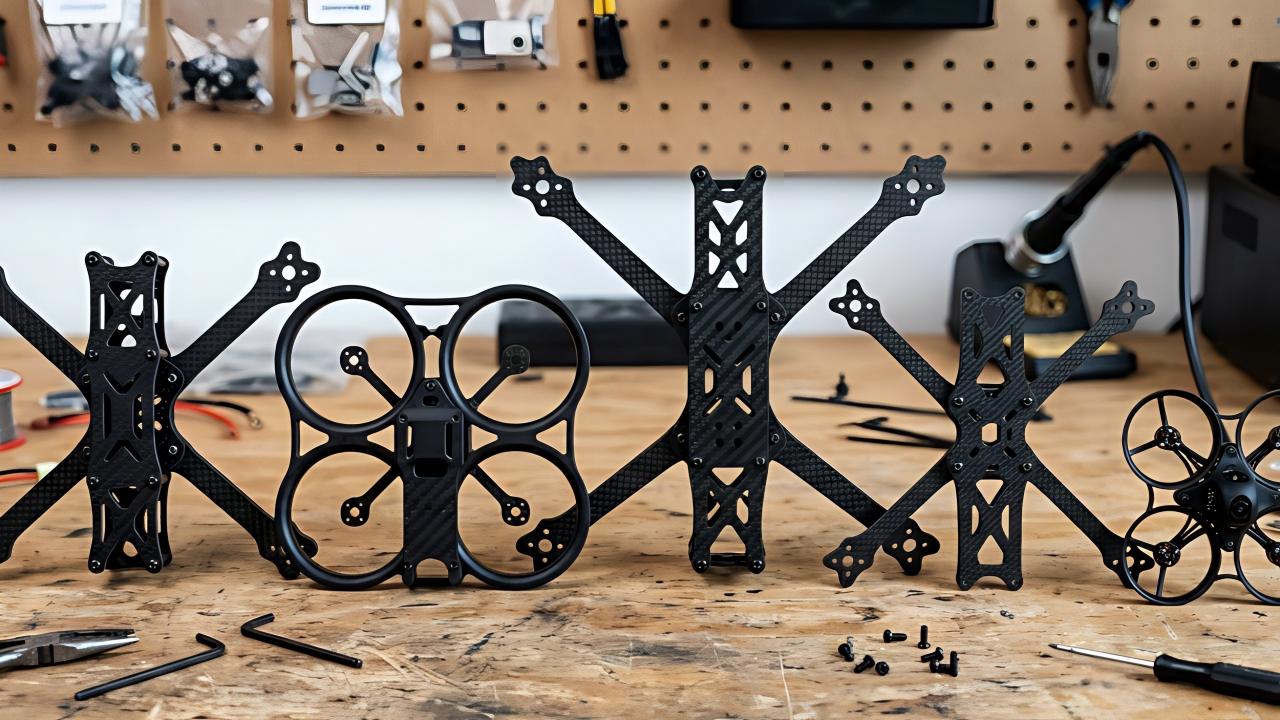
What really makes an FPV drone fly the way it does? Much of it comes down to the frame, the hidden hero behind every flip, dive, or long-range glide. The choices you make in material, size, geometry, construction, and style shape everything from durability to agility and even your camera’s stability.
Understanding these options ensures your drone fits your skill level and flying style, whether you’re piloting a 5-inch freestyle X501 for acrobatics or a 7-inch long-range X701 for cinematic exploration.

Fig. 1 Types of FPV Frames
Carbon, Plastic, or Hybrid: Which Survives the Crash?
First, let’s see which materials can survive crashes—or boost your drone to peak performance. The material of a drone frame directly impacts its weight, durability, and performance.
- Carbon Fiber is the industry standard for most FPV frames due to its high strength-to-weight ratio and resistance to flex. It absorbs vibrations well, which is essential for stable video recording and precise control. Carbon fiber frames are also durable under crashes, making them ideal for freestyle flying where impacts are frequent.
- Plastic and Nylon Composites are lightweight and inexpensive alternatives, often found in micro and Tiny Whoop drones. While they don’t have the rigidity or vibration resistance of carbon fiber, they are forgiving in minor crashes and can be easily replaced or upgraded.
- Hybrid Frames combine carbon fiber with plastic or aluminum parts, providing a balance between durability, weight, and cost. Hybrids are particularly popular in custom builds where designers want a mix of rigidity in key areas and flexibility in others.
Carbon fiber is ideal for high-performance freestyle and racing, while plastic frames suit beginners and micro drone pilots. Hybrids work well for pilots seeking a balance of strength and affordability.

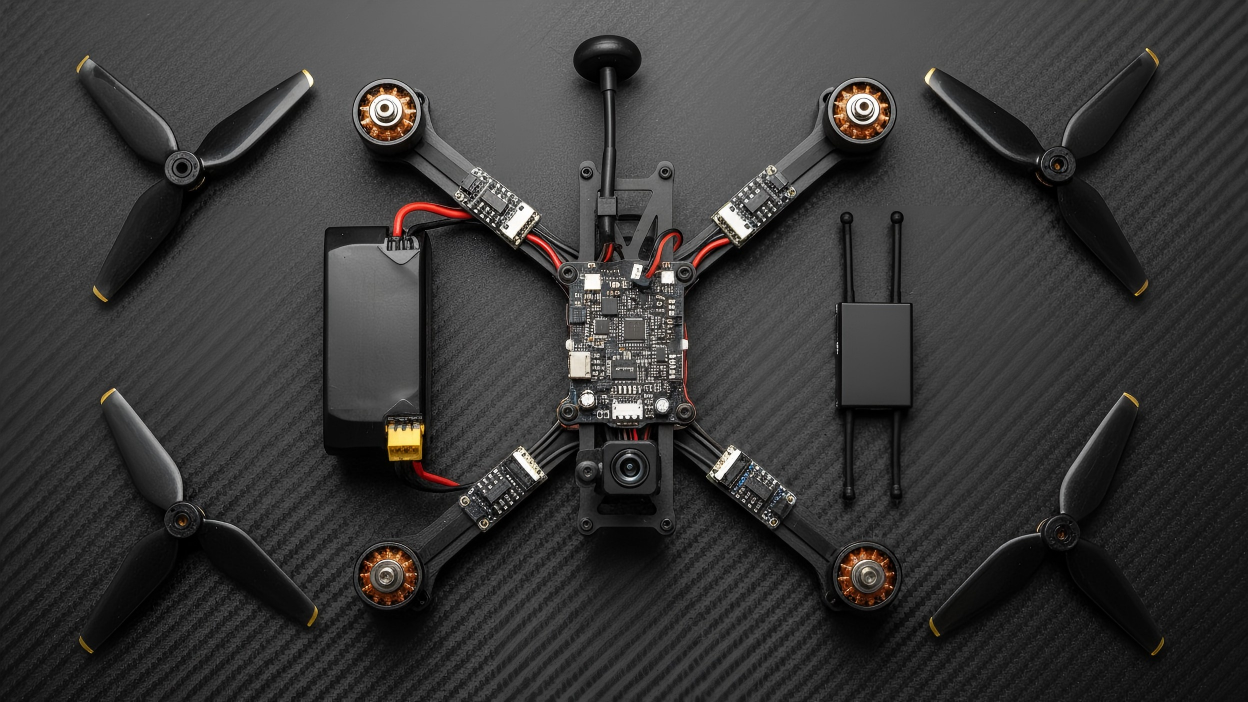
Fig. 2 Carbon Fiber X501 FPV Frame
Tiny to Long-Range: Picking the Right Frame Size
Next, let’s see how big your drone should be. Size affects where you can fly, how stable it feels, and how much gear it can carry.
- Tiny Drones (65–90mm) are designed for indoor flying and limited outdoor maneuvers. Their compact size allows for safe flights in confined spaces, making them ideal for beginners and urban pilots.
- Micro and Mini Drones (120–180mm) strike a balance between portability and performance. These frames support moderate payloads, making them suitable for small cameras and versatile flying.
- Standard Racing/ Freestyle Frames (180–250mm) dominate outdoor FPV freestyle and racing. They offer stability at high speeds and enough space for robust components, batteries, and cameras.
- Long-Range Frames (250mm and above) are larger, prioritizing stability, efficiency, and endurance over agility. These frames can accommodate bigger batteries, higher-quality cameras, and advanced electronics for extended flight.
Match the frame size to your flying environment and goals. Small frames for indoors or tight areas, mid-size for freestyle and racing, and large frames for long-range and aerial photography.
X, H, or Stretched: Which Geometry Fits You?
Frame geometry determines the flight characteristics and responsiveness of an FPV drone.
- X-Frame is the most common layout, with arms forming an “X” shape. It provides balanced weight distribution, making it versatile for freestyle, racing, and general flying.
- H-Frame has parallel arms connected by a central body, offering increased rigidity and space for electronics. It’s often chosen for long-range drones where stability and endurance are priorities.
- Stretch X or Hybrid Geometries adjust arm angles to improve cornering, yaw responsiveness, or payload capacity. These frames are typically seen in high-end racing drones where fine-tuned handling makes a difference.
- True X vs. Stretched X: True X frames deliver equal performance in all directions, while stretched X frames enhance forward flight efficiency at the cost of agility in lateral maneuvers.
X-frames are a versatile choice for most pilots. H-frames suit long-range enthusiasts, while stretched X frames are optimal for aggressive racing setups.
CNC or 3D printing: Which builds the perfect drone?
Let’s look at how the frame is made. The method used to make a frame affects its durability, precision, and cost.
- CNC Milling involves cutting the frame from a solid block of material, typically carbon fiber. CNC frames are precise, highly durable, and able to handle crashes without deformation. They are favored in high-performance and competitive drones.
- 3D Printing allows for rapid prototyping and custom designs using plastics or resin composites. While lighter and more customizable, 3D-printed frames are generally less rigid and more prone to damage during hard impacts. However, they are excellent for hobbyists experimenting with unique shapes or testing new frame concepts.
- CNC frames for serious pilots seeking durability and performance; 3D-printed frames for beginners, casual flyers, or experimental builds.

Fig. 3 CNC-Made FPV Frame
Freestyle, Racing, or Cinewhoop: What’s your flying personality?
Frame style is often a reflection of the intended purpose and pilot preference.
- Freestyle Frames are designed to withstand flips, rolls, and crashes. They prioritize durability, vibration damping, and modularity for easy repairs.
- Racing Frames focus on speed, agility, and minimal weight. They are typically lightweight, aerodynamic, and optimized for forward thrust efficiency.
- Cinewhoop Frames, such as the 2.5-inch Droneer C2501, are designed to carry cameras for smooth, cinematic footage. They often include protective ducts around propellers to ensure safety indoors and prevent damage to objects or people.
- Hybrid Frames combine elements of multiple styles, offering a flexible solution for pilots who enjoy both freestyle tricks and smooth filming.
Choose a frame style based on your flying style—freestyle for acrobatics, racing for competitions, cinewhoop for cinematic video, and hybrid for a bit of everything.
Conclusion
FPV drone frames are far more than just a skeleton—they dictate performance, durability, and style. Material, size, geometry, manufacturing method, and style all influence the way a drone flies, responds to crashes, and supports electronics. Understanding these classifications allows pilots to make informed decisions that align with their skill level, environment, and flight goals.
Always match your frame choice with your flying style, desired durability, and budget. Beginners may prefer small, plastic frames or hybrid designs, while seasoned pilots often gravitate toward carbon fiber CNC frames in X or stretched X geometries for peak performance.

Leave a comment
This site is protected by hCaptcha and the hCaptcha Privacy Policy and Terms of Service apply.