
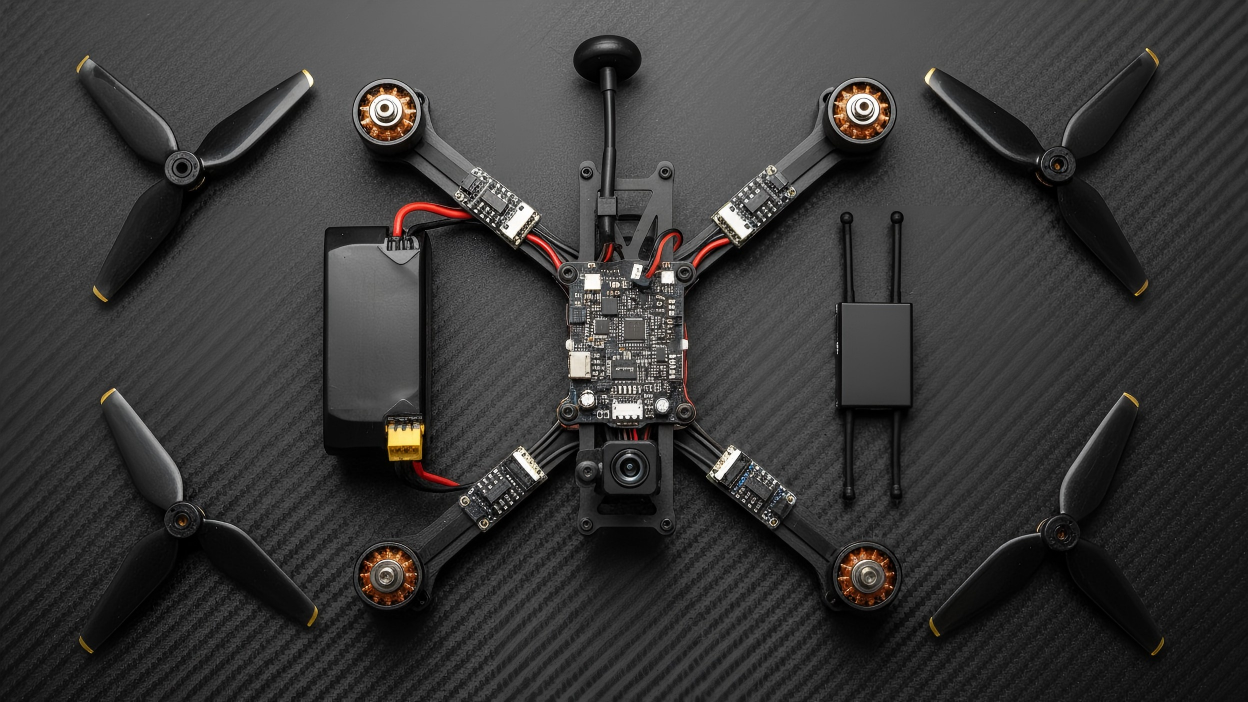
Many newcomers to the FPV drone world often ask themselves the same question: should I build my own drone, or is it better to buy a ready-to-fly (RTF) model? At first glance, both options are tempting. A ready-to-fly drone promises almost instant flight with minimal setup, while a DIY build offers complete control over every aspect of your drone’s performance.
Let’s discuss the differences between DIY FPV builds and RTF drones, weigh the pros and cons of each approach. Hope that you can have a better understanding and get started on your FPV journey.
What is an RTF Drone?
An RTF drone, short for “Ready-to-Fly,” is a drone that arrives fully assembled and tested. The main appeal of an RTF model is its simplicity: you can take it out of the box, charge the battery, bind it to your remote controller, and take to the skies without much technical preparation.
RTF drones come with pre-installed components, such as motors, flight controllers, ESCs, and propellers, and often include a fully configured FPV system with a camera and video transmitter. Because the hardware is already set up, very little technical knowledge is required to start flying. Essentially, within hours of unboxing, you can be enjoying your first flight.

Fig. 1 DJI FPV Drone Kit
Cons and Pros of RTF Drones
One of the biggest advantages of an RTF drone is immediate access to flight. You won’t need to solder wires, configure firmware, or worry about assembling components. Pre-tested systems also tend to be more reliable, reducing the risk of mechanical or electrical issues. RTF drones are designed to be beginner-friendly, letting you focus on flying rather than troubleshooting. Many models even come with a manufacturer’s warranty, giving extra peace of mind if anything goes wrong.
However, this convenience comes with trade-offs. RTF drones generally allow limited customization, as the factory configuration dictates how the drone flies and what components are used. Repairing or upgrading parts can be challenging if something breaks. Additionally, high-quality RTF drones often come with a higher price tag compared to a DIY build of similar performance. For beginners who want to start flying immediately and value simplicity over personalization, an RTF drone is usually the best choice.
What is a DIY FPV Build?
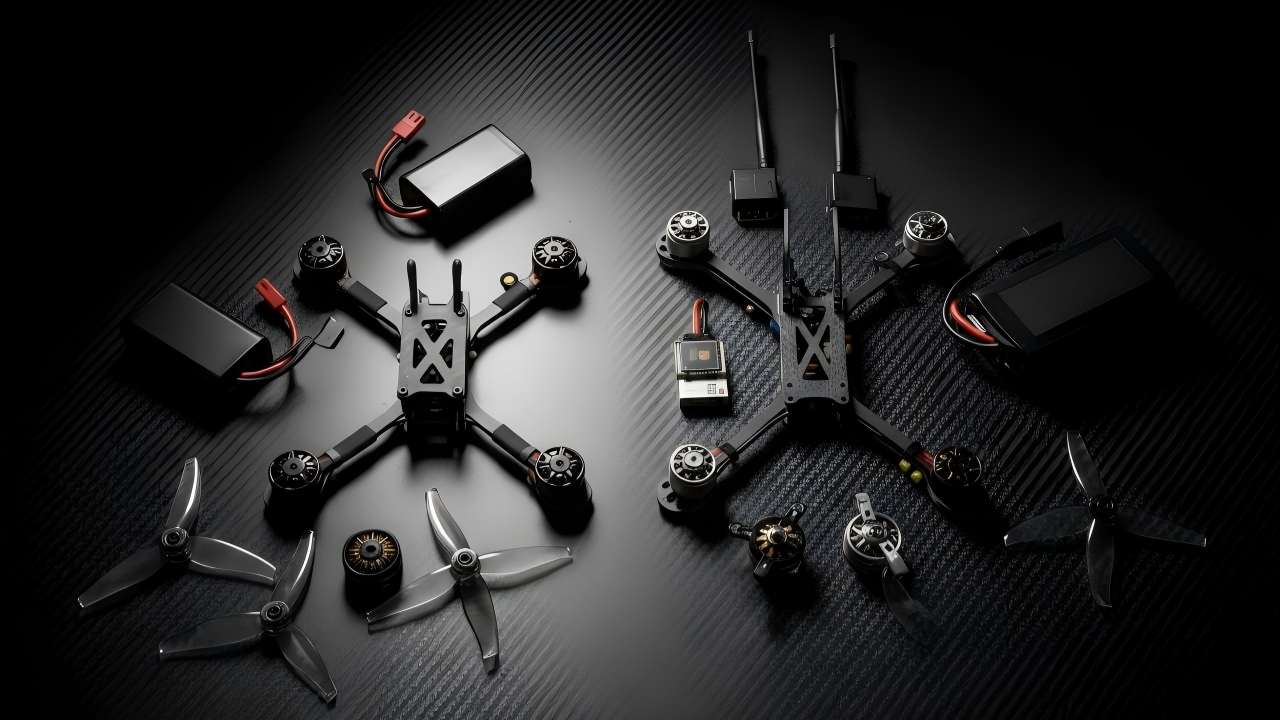
A DIY FPV build involves assembling every part of the drone yourself. From choosing the frame, motors, and ESCs to installing the flight controller, FPV system, and receiver, you are responsible for creating the entire system. This approach gives you total control over how your drone performs and behaves.

Fig. 2 DIY FPV Build
Cons and Pros of DIY FPV Drones
The appeal of a DIY build lies primarily in customization and learning. By selecting components carefully, you can prioritize speed, flight time, maneuverability, or durability, depending on your flying style. When parts inevitably break, you will also know exactly how to repair or replace them, saving money and avoiding frustration. Many pilots find that a well-sourced DIY build can be more cost-effective than an RTF drone of similar performance.
DIY builds are also an excellent educational experience. Assembling a drone requires understanding how components work together, wiring, soldering, and configuring firmware. For many enthusiasts, the sense of satisfaction from watching a drone they built with their own hands take off for the first time is unmatched.
However, building a drone from scratch is not without challenges. It is time-consuming, often requiring hours or even days to assemble and fine-tune. Technical skills are essential, and mistakes during assembly or wiring can damage expensive components. The initial investment in high-quality parts can also add up quickly. Furthermore, DIY drones may not look as polished as factory-made RTF models, as the aesthetic finish is often secondary to functionality. Despite these hurdles, DIY builds are ideal for hobbyists and tech enthusiasts who enjoy customizing, repairing, and fully understanding their equipment.
Comparing DIY Builds and RTF Drones
When deciding between an RTF drone and a DIY build, several factors come into play.
- RTF drones are ready to fly almost immediately, with minimal setup, whereas DIY builds require a significant time commitment to assemble and configure.
- In terms of customization, DIY builds offer full control over each component and performance parameter, while RTF drones are largely limited to the factory setup.
- Repair skills are another important consideration. With a DIY build, you develop the knowledge to troubleshoot and fix issues, while RTF drones often require professional repair or replacement if something breaks.
- The cost comparison is less straightforward: RTF drones can be more expensive upfront, but they include all necessary components in a convenient package. DIY builds can save money if you source parts wisely, but initial costs for quality components and tools can be high.
- Finally, the learning curve is much steeper with a DIY build, requiring comfort with electronics, soldering, and firmware configuration, whereas RTF drones are beginner-friendly.
Equipment Requirements
Regardless of the path you choose, you will need some basic equipment. RTF users need a compatible FPV goggles system, a remote controller, a battery and charger, and it’s recommended to have spare propellers on hand.
For DIY builders, the equipment list expands. In addition to the items above, you will need soldering tools and wires, extra props, screws, Velcro straps, and potentially GPS or telemetry modules depending on your drone’s purpose. Common DIY components include a lightweight frame, motors selected for your preferred flight style, ESCs, a flight controller running firmware such as Betaflight or iNav, an FPV camera and video transmitter, a compatible receiver, batteries, and chargers. Optional add-ons can include GPS modules, sensors, or additional flight aids.
Making the Choice
Choosing between an RTF drone and a DIY build depends largely on your personal goals and comfort level.
- If you are new to FPV and want to start flying immediately, or if convenience and ease of use are your top priorities, an RTF drone is likely the better option.
- On the other hand, if you enjoy building electronics, want complete control over your drone’s performance, and plan to repair, upgrade, or customize your system, a DIY build will be more rewarding.
Many pilots find that a balanced approach works best. Starting with an RTF drone allows you to gain essential flight experience before tackling the complexity of a DIY build. This method reduces frustration and helps build confidence, making the eventual transition to a custom-built drone much smoother.
Conclusion
Both DIY FPV builds and RTF drones have their advantages. RTF drones offer immediate flight, reliability, and simplicity, making them perfect for beginners or casual pilots. DIY builds provide unmatched flexibility, repair knowledge, and a rewarding hands-on experience for enthusiasts.
Ultimately, the choice depends on your goals, technical skills, and how much time you’re willing to invest. Whatever you decide, make sure to prepare the necessary equipment, fly safely, and enjoy the exhilarating world of FPV flight. With patience, curiosity, and practice, both paths can lead to incredible experiences in the sky.

Leave a comment
This site is protected by hCaptcha and the hCaptcha Privacy Policy and Terms of Service apply.