
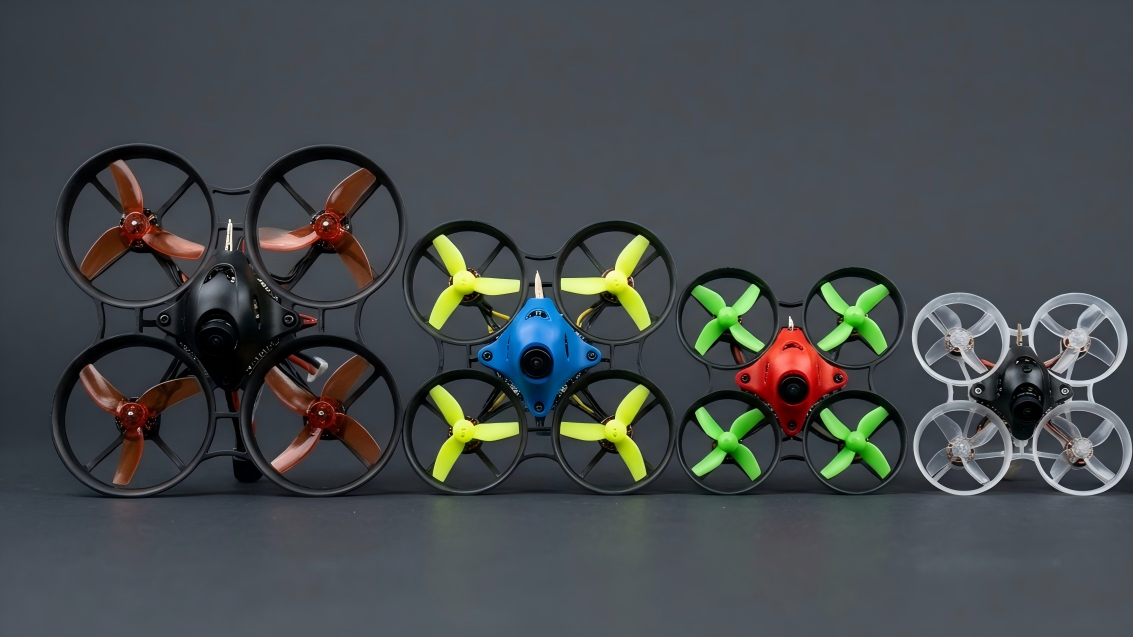
With the fast-growing popularity of FPV drones, the tinywhoop category has managed to create a special place for itself. Tinywhoops are great drones to start learning how to pilot, and at the same time they are perfect for experienced pilots who wish to enjoy flying in a confined space. Let’s find out more about tinywhoops, including their parts and features, as well as the places you can fly them in.
What is a Tinywhoop?
A Tiny Whoop is a small, lightweight, ducted and durable First-Person View (FPV) quadcopter. This palm-sized First-Person View (FPV) drone typically measures between 65mm and 85mm across and weighs under 30 grams. These drones feature integrated plastic propeller guards, or ducts, which protect the blades, improve stability, and make them safe for indoor flight.
Tinywhoops are ideal for indoor environments such as living rooms, offices, or community FPV arenas, and are popular among beginners learning to fly with FPV goggles as well as experienced pilots practicing freestyle maneuvers. Their compact size and low weight make them safe to operate around people and pets, while their agility allows them to navigate tight spaces, fly through obstacles, and perform fun, high-speed maneuvers in areas where larger drones cannot safely operate.

Fig. 1 Tinywhoops
Typical Components of Tinywhoops
Several features distinguish tinywhoops from other types of FPV drones:
Tinywhoops are exceptionally small and lightweight FPV drones, typically weighing under 30 grams with a wheelbase of 65–85mm. Their compact size makes them highly maneuverable, easy to transport, and safe to fly indoors around people and pets. Despite their diminutive form, these micro drones provide an immersive first-person view (FPV) experience and are durable enough to survive the occasional collision, making them ideal for beginners and experienced pilots alike.
Another defining feature is its ducted frame, which integrates circular propeller guards in a single molded piece, usually made from impact-resistant polypropylene or nylon. This design protects the propellers, absorbs impacts against walls or furniture, and improves stability during indoor flight.
Complementing the ducted frame is the canopy, a thin plastic or 3D-printed shell that covers the all-in-one flight controller, safeguarding the FPV camera, securing the antenna, and reducing wind resistance for smoother flight. The all-in-one (AIO) flight controller is another hallmark, packing an F4 or F7 processor, four micro ESCs, a receiver, and often an analog video transmitter into a single 25.5 x 25.5mm board weighing only 3–4 grams. Powering all of this is a 1S high-voltage LiHV battery, typically 300–550mAh, which provides enough thrust and flight time while keeping the drone extremely lightweight and agile.
Where and When to Fly Tinywhoops
Due to their small size, lightweight design, and prop guard features, tinywhoops can be flown practically any time and any place. They are especially appropriate for indoor flights, which makes them a hobby that does not depend on the weather and can be enjoyed throughout the year. The perfect places for flying include houses, apartments, office space, basements, and even warehouses. Common items found indoors such as chairs, doors, and stairways can easily serve as obstacles.
In case of outdoor flights, tinywhoops can be flown in backyard areas, parks, playgrounds, and miniature racetracks, provided that the weather is calm and there is no wind. Due to their lightweight nature, flying in windy weather might negatively affect their performance. They are great for training FPV skills, as well as performing freestyle maneuvers or precision flying. Their small and agile design enables them to easily maneuver in narrow spaces, fly through obstacles, and even safely fly at high speed around people and animals.
Types of Tinywhoops
Tinywhoops come in several classes based on size, weight, and intended flying environments.
- 65mm Class: The quintessential tinywhoop, using 31mm propellers and weighing only 18–20 grams. These ultra-lightweight drones are perfect for tight indoor spaces such as apartments, offices, or small basements. Their small size and low weight make them highly maneuverable and the safest choice for indoor flying around people and furniture.
- 75mm Class: Often referred to as the “outdoor whoop,” these drones use 40mm propellers and weigh 20–24 grams. The added weight improves stability in light outdoor wind while still allowing safe indoor flights. They are versatile for both indoor practice and casual outdoor flying in calm conditions.
- 85mm+ Class: These drones push the upper limits of the tinywhoop category. Designed for higher power and more aggressive flight, they excel in open outdoor spaces but require more room to operate safely. Their heavier build makes them less suited for tight indoor maneuvers but ideal for freestyle or fast outdoor runs.
In addition, there are specialty tinywhoops that cater to specific needs:
- FPV-Ready vs. DIY Kits: FPV-ready tinywhoops come preassembled with cameras and transmitters, making them perfect for beginners. DIY kits allow pilots to customize motors, frames, electronics, and even cameras for tailored performance.
- Cinewhoops: These tinywhoops are optimized for cinematic FPV filming. They offer smoother flight characteristics, stable hovering, and cameras suited for capturing high-quality video. Cinewhoops are popular among content creators looking to record indoor or small outdoor environments with precise control and minimal turbulence.
Whether you are a beginner seeking safe indoor practice or an advanced pilot exploring cinematic shots or outdoor freestyle, there is a tinywhoop class fitting your flying style and environment.

Fig. 2 Types of Tinywhoop
Why Tinywhoops
1. Safety
Tinywhoops are designed using ducted propellers and lightweight frames, making them much safer than other types of drones. A typical 65mm Tinywhoop weighs about 18-20 grams and is very hard to break when it hits objects such as walls or furniture, even pets. There are many cases where pilots have flown these drones around the house or classroom with no harm done.
2. Convenience
These drones are extremely portable, easy to charge, and easy to use. The 1S LiHV battery is quick and easy to replace, giving you multiple chances to fly in a row without a long pause. For example, when you take part in a local FPV meetup, it's common for pilots to carry multiple tinywhoops in a small backpack.
3. Multi-Scenario Use
Tinywhoops can be used indoors, outdoors, and in partially open areas. For instance, the 75mm 'outdoor whoop' can withstand a little wind in your backyard and move around indoors like a hallway or an office.
4. Simple to Learn and with Little Restrictions
The ease of control and stability offered by these drones make them easy to learn to fly. New pilots can master FPV flight easily without too much difficulty. Most beginners find themselves mastering hovering skills and navigating through an obstacle course after only a few hours of training. They are not as scary as other drones, and you don’t need any special knowledge to operate them.
5. Low Price
Tinywhoops are cheap to buy and maintain. A 65mm class drone costs about $50-$100, while the replacement parts such as motors and propellers cost only a couple of dollars. Therefore, you will not break the bank when buying these drones.
6. Durable and Easy to Maintain
They are crash-friendly, as the ducted frame, flexible plastic canopy, and lightweight motors help minimize the damage caused in case of a crash. Drones usually fly several laps through furniture indoors without having to repair anything.
7. Technology and Accessories Evolving
There are constant improvements within the tinywhoop community. The latest AIO flight controllers, brushless motors, and high voltage LiHV batteries ensure longer flight times, better video feeds, and improved stability. It has become possible to purchase accessories such as goggles, new frames, and improved cameras that enable pilots to tailor their drones according to their skill level.
Conclusion
Tinywhoops have revolutionized the micro FPV scene. Their small size, durability, and agility make them ideal for indoor flying, skill-building, and even competitive racing. Understanding their features, components, and the best using environments to fly them allows both beginners and advanced pilots to maximize performance. Whether you’re flying for fun, practice, or cinematic adventures, tinywhoops provide an exciting gateway into the world of FPV drones.

Leave a comment
This site is protected by hCaptcha and the hCaptcha Privacy Policy and Terms of Service apply.