
INTRODUCTION
Drones have exploded in popularity over the past decade, transforming everything from filmmaking and photography to racing and recreational flying. Most people think of drones as the classic multi-rotor devices hovering in the sky, taking smooth aerial shots. But there’s another type of drone that has captured the imagination of hobbyists and professionals alike: the FPV drone.
You may have seen FPV drones zipping through tight spaces at lightning speed or performing jaw-dropping acrobatics in the air. FPV stands for First-Person View, and it offers a flying experience far more immersive than traditional drones. But what exactly does FPV mean, and why are these drones considered “better” in certain applications? Let’s dive in.

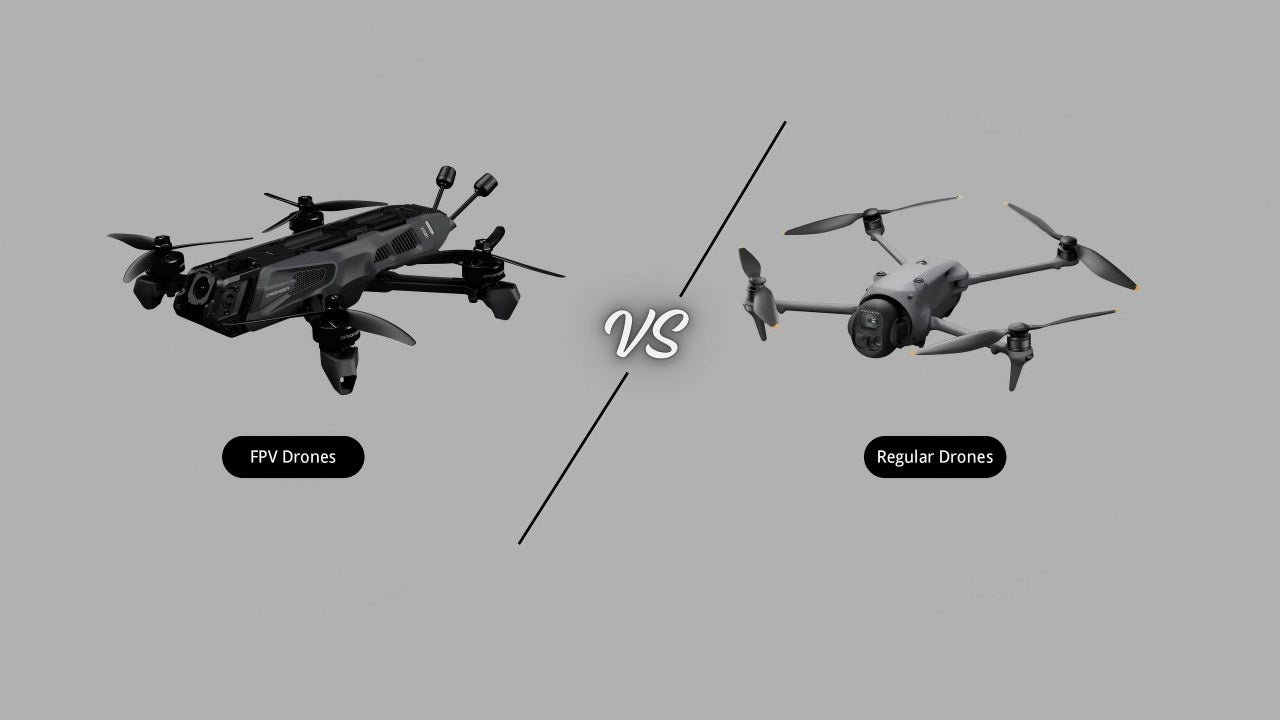
FPV Drones vs Regular Drones
WHAT FPV STANDS FOR
FPV literally stands for First-Person View, which means the pilot flies the drone from the perspective of the drone itself. Rather than watching it move from a distance, you see what the drone sees through real-time video streaming. This is achieved using a small camera mounted on the drone and a video transmitter that sends the live feed to FPV goggles or a screen.
Unlike traditional drones, which rely on line-of-sight control, FPV drones place you “inside” the cockpit. Every twist, turn, and flip feels like you are flying rather than just controlling a machine. This immersive perspective has revolutionized drone racing, freestyle aerial maneuvers, and cinematic filming in challenging environments.
HOW FPV DRONES WORK
An FPV drone is slightly different from a standard drone in its setup and purpose. Here are the key components:
- Drone Frame: Typically smaller and lighter than traditional drones. Frames are designed for agility, often with exposed propellers for reduced weight.
- FPV Camera: Captures live footage and sends it to the pilot. Many cameras are lightweight HD units optimized for minimal lag.
- Video Transmitter (VTX): Transmits live video to the goggles or monitor. Signal strength and frequency determine how far you can fly while maintaining real-time feedback.
- FPV Goggles or Monitor: Allows the pilot to see through the drone’s perspective. Goggles provide an immersive experience, while monitors can be used for casual flying.
- Controller: The pilot uses a radio controller to maneuver the drone, adjusting throttle, pitch, yaw, and roll with precise input.
The combination of lightweight design, responsive motors, and live video makes FPV drones exceptionally agile. Unlike traditional drones, FPV drones, especially the freestyle X501 Drone, can perform tight maneuvers, sharp turns, rolls, flips, and even fly through narrow spaces like hallways, forests, or between obstacles.
TRADITIONAL DRONES VS FPV DRONES
Design Differences:
Regular drones are designed for stability and carrying heavy cameras. They are often larger, with wider propellers and built-in gimbals for smooth video. FPV drones prioritize speed, agility, and maneuverability, sacrificing some camera stability for performance.
Flight Experience:
Flying a regular drone is like guiding a hovering camera through the sky—you see the landscape and have some control over the shot. FPV flying, however, is like sitting in the pilot seat. The drone reacts to your every input instantly, making the flight feel alive.
Camera Capabilities:
Traditional drones often have high-resolution cameras (4K or 5K) with gimbals for stabilization. FPV drones may not always match that resolution, but the footage is highly dynamic, offering cinematic angles that standard drones cannot reach, especially in tight or complex environments.
Skill Requirement:
Traditional drones are beginner-friendly; GPS stabilization, obstacle avoidance, and automatic takeoff/landing features make flying straightforward. FPV drones require more practice and skill, with a steeper learning curve that rewards patience and dedication.
|
Feature |
FPV Drone |
Traditional Drone |
|
Flight Perspective |
First-person view via goggles |
Line-of-sight or screen on controller |
|
Flight Style |
Agile, acrobatic, high-speed |
Stable, smooth, slower-paced |
|
Size & Design |
Small, modular, lightweight |
Medium to large, built for stability and payload |
|
Camera |
HD or digital, low-latency, dynamic shots |
4K–5K, gimbal-stabilized, cinematic |
|
Skill Level |
High learning curve |
Beginner-friendly |
|
Use Cases |
Racing, freestyle, tight-space filming |
Photography, surveying, recreational flying |
|
Crash Tolerance |
High, modular repairable parts |
Moderate, limited repair options |
ADVANTAGES OF FPV DRONES OVER TRADITIONAL DRONES
Immersive Flying Experience
With FPV drones, you’re not just guiding a machine—you’re inside it. Wearing FPV goggles, every turn, flip, and dive feels natural and thrilling. This real-time perspective makes flying more engaging, allowing pilots to tackle complex maneuvers and low-altitude paths that traditional drones can’t safely handle.
Agility and Speed
FPV drones are designed for pure performance. They can reach high speeds—often exceeding 100 km/h—and accelerate almost instantly. This makes them perfect for racing, freestyle stunts, or chasing fast-moving subjects like cars or motocross riders. Unlike traditional drones, which focus on stability, FPV drones can dive, roll, and weave through obstacles with precision.
Cinematic Flexibility
Filmmakers love FPV drones because they can capture footage in spaces standard drones can’t touch—tight hallways, dense forests, or between obstacles. The resulting shots feel dynamic and immersive, offering perspectives and angles that simply aren’t possible with stabilized camera drones. Every flight opens up creative opportunities for storytelling.
Customizability and Durability
Most FPV drones are modular and highly customizable. Pilots can pick frames, motors, cameras, and electronic speed controllers to build a drone that fits their exact style and needs. Many models are also built to withstand crashes—freestyle drones can take hits from walls, trees, or even concrete, making them much more resilient than typical consumer drones. This combination of adaptability and durability encourages experimentation and skill growth.
COMMON CHALLENGES AND CONSIDERATIONS
While FPV drones are thrilling, they come with considerations:
Higher Skill Requirement: Crashes are common for beginners, and learning to fly FPV safely takes practice.
Maintenance: Crashes can damage frames, propellers, and electronics. Parts may need frequent replacement.
Legal Considerations: FPV flying often requires a spotter for line-of-sight compliance in some regions. Regulations vary by country.
Battery Life: FPV drones are lightweight, so flight times are shorter—typically 4–10 minutes—compared to traditional drones.
WHO SHOULD FLY AN FPV DRONE
FPV drones aren’t for everyone—they reward patience, skill, and a sense of adventure. They’re perfect for hobbyists and drone racers seeking speed and thrills, filmmakers looking to capture cinematic shots in tight or complex spaces, and tech enthusiasts who enjoy building, customizing, and fine-tuning their own drones. Essentially, if you want to feel the flight, push your limits, and explore creative possibilities, FPV is made for you.
CONCLUSION
FPV stands for First-Person View, and it represents a completely different way of experiencing flight. Unlike traditional drones that focus on stability and ease-of-use, FPV drones offer speed, agility, and an immersive pilot perspective. Whether for racing, freestyle, or capturing cinematic footage in challenging environments, FPV drones push the boundaries of what’s possible in aerial technology.
For anyone who loves drones, FPV flying is the ultimate next step—challenging, exhilarating, and incredibly rewarding. Once you try it, there’s no going back to just watching your drone from a distance. FPV puts you in the cockpit and lets you truly feel the sky.

Leave a comment
This site is protected by hCaptcha and the hCaptcha Privacy Policy and Terms of Service apply.