
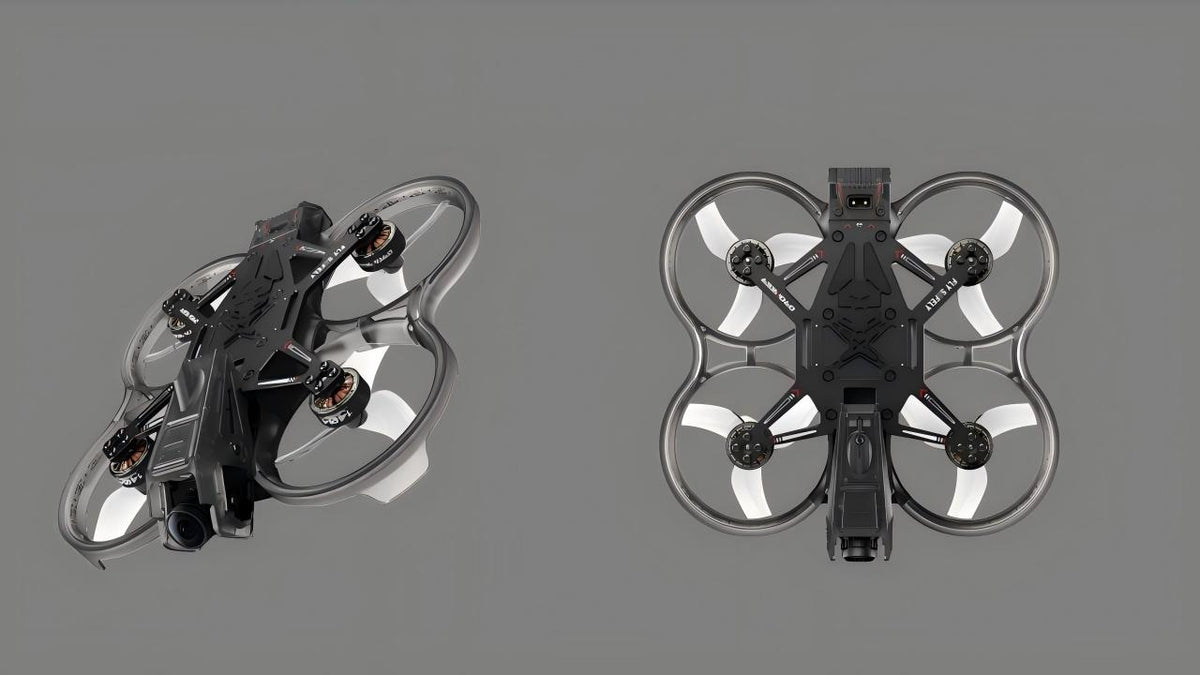
Cinewhoop FPV drones have gained popularity not only among drone enthusiasts but also cinematographers. Such drones offer a compromise between speed, safety, and cinematography capabilities, letting the pilot record high-quality footage even in small places. The guide will help you learn more about Cinewhoop FPV drones, including their definition and comparison with other FPV drones.
What is a Cinewhoop FPV Drone?
A Cinewhoop is a type of small, ducted FPV (First-Person View) drone designed primarily for cinematic flight. Unlike traditional racing drones, Cinewhoops prioritize stability and smoothness over raw speed, making them ideal for indoor flights or close-proximity filming.
Key aspects of a Cinewhoop include:
- Ducted propellers: Protective frames around propellers to allow safe indoor flying and reduce risk of damage to objects or people.
- FPV system: A camera feed that allows pilots to navigate the drone from a first-person perspective.
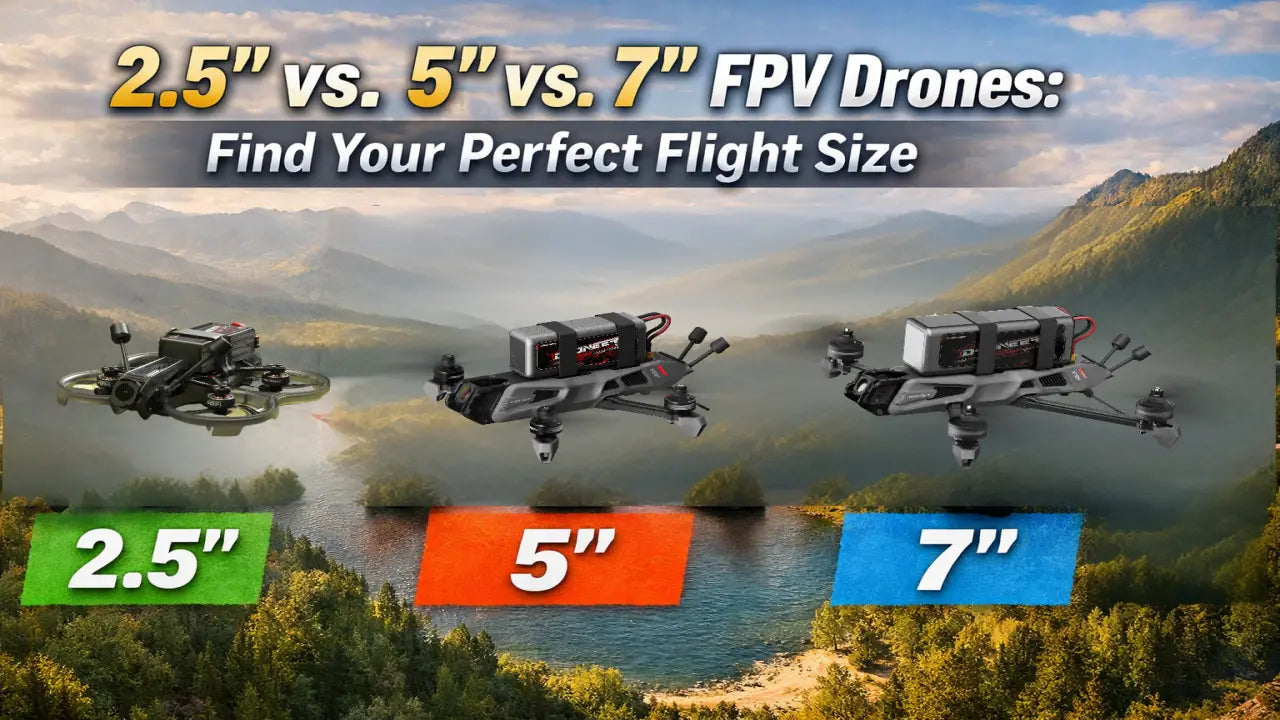
- Compact size: Typically 3–5 inches in propeller diameter, allowing maneuvering in tight spaces.
In essence, a Cinewhoop combines the agility of an FPV drone with the safety and stability needed for cinematic purposes.

Fig. 1 2.5-inch FPV Drone
Advantages of Cinewhoop FPV Drones
The Cinewhoop drone has grown to become one of the most preferred pieces of equipment for filmmakers and FPV hobbyists because of its capacity to record high-definition videos in confined spaces that would not permit the use of bigger drones. This particular drone comes with lightweight cameras like the GoPro Hero or DJI Action 2 without reducing the stability, giving pilots an immersive experience in every single flight. Using advanced FPV technology, pilots have real-time access to 1080p video streams with very little delay, ensuring they can maneuver their drones accurately, framing every shot as they envisaged.
However, the outstanding performance of the Cinewhoop lies in its well-thought-out design. Using ducted propellers of 2.5 to 3.5 inches, the drone mimics the movements of a steadycam, maintaining its stability while navigating narrow corridors, flights of stairs, and other indoor spaces. Moreover, the tiny size of the frames gives pilots enough clearance to navigate around actors, furniture, or fragile exhibits in museums without causing harm. Additionally, the fact that the motors and propellers are enclosed in these frames makes the drones silent enough for indoor and wildlife filming.

Fig. 2 Cinewhoop Flights
Types of Cinewhoop Drones
Cinewhoops vary based on design, size, and intended use. Here are the main types:
- For newbies or anyone flying indoors in really tight spaces, a 1.6-2 inch Cinewhoop under 250g weight will serve perfectly. Being very light, it can navigate around other objects without posing any danger to you or other things.
- Moving forward to the drones that have 2.5 inches of propellers in diameter, they are the ideal choice for both indoor and outdoor flights. They can lift mid-sized action cameras, making them suitable for capturing movies at schools or offices, for example.
- For those who seek professional-quality outdoors photography, drones such as 3-3.5-inch Cinewhoops have better load-bearing capability and wind-resistance power. They are best at carrying standard action cameras and are capable of providing high-quality videos that can be suitable for fast-paced sports, landscapes, and complicated outdoor scenes.
Of all these choices, it appears that the 2.5-inch Cinewhoops can be defined as Indoor/Outdoor Balance. A good example of this category is the Droneer C2501 drone that provides the latest technology within its very compact and light-weight body. Specifically, it has a flight controller F722 AIO along with a 40A ESC. Thus, this drone offers precise control, steady behavior, and excellent performance of a drone during the gate flying process..
Applications of Cinewhoop FPV Drones
Cinewhoop FPV drones are suitable for use in environments that require precision, safety, and high-quality filming. The design of small and robust frames together with ducted propellers makes them appropriate for filming in tight areas, either indoors or outdoors. Some of the applications of these drones include:
1. Real Estate: Filming homes and buildings from within to get footage on interior designs.
2. Museums and exhibitions: Shooting priceless and fragile artifacts inside museums in a secure manner.
3. Indoor filming events: Filming weddings, parties, and other events with people around.
4. Urban filming outside: Capturing the hustle of urban areas such as streets and alleys.
5. Sports and action: Recording athletes in gyms, stadiums, or outdoor grounds without any risk of collision.
6. Creative shots: Exploring different shooting perspectives by flying below bridges, in windows, or narrow pathways.
7. Flight training: Mastering skills of indoor flying and maneuvering with a Cinewhoop drone.
Comparison Table: Cinewhoops vs. Other FPV Drones
|
Feature |
Cinewhoop FPV Drone |
Racing FPV Drone |
Standard Camera Drone |
|
Primary Purpose |
Cinematic shots / indoor flying |
Speed / racing / acrobatics |
Stable aerial footage |
|
Propeller Guards |
Yes (ducted) |
No |
No |
|
Flight Stability |
High |
Medium |
Very High (GPS-assisted) |
|
Size |
3–5 inch props |
5–7 inch or more |
5–10 inch+ |
|
Speed / Agility |
Moderate |
Very high |
Low |
|
Indoor Safety |
Excellent |
Poor |
Moderate |
|
Camera Options |
FPV + HD optional |
FPV only or lightweight cameras |
Integrated high-quality cameras |
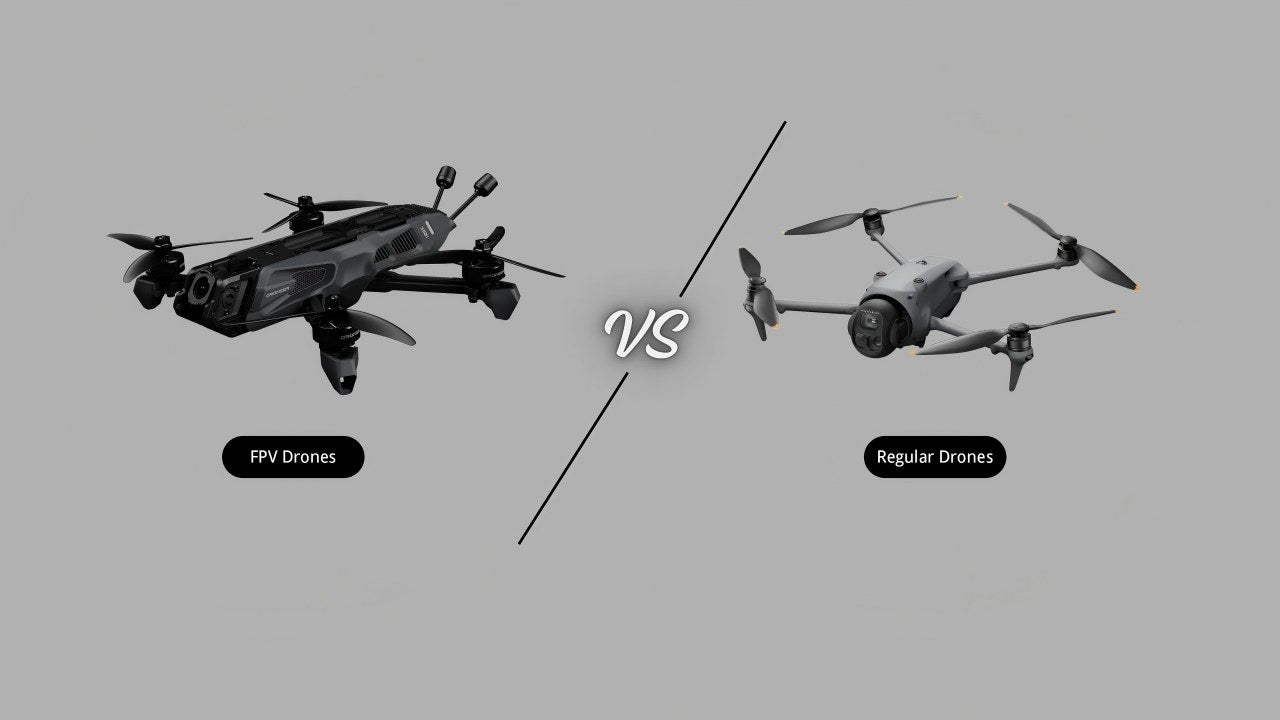
Cinewhoops excel where safety, cinematic quality, and indoor capability are priorities. Racing drones are unmatched for speed and acrobatics, while standard camera drones offer stable footage but limited FPV control and maneuverability.
Conclusion
FPV Cinewhoops blend safety, agility, and cinematic capability in a compact form. They open up possibilities previously limited by traditional drones, enabling creators to capture flowing interior shots, immersive real estate tours, or dynamic action sequences with ease.

Leave a comment
This site is protected by hCaptcha and the hCaptcha Privacy Policy and Terms of Service apply.