
FPV drones offer an exhilarating, immersive experience, but mastering them in the real world can be expensive and risky. Crashes, repairs, and unpredictable environments make practice essential. FPV flight simulators solve this by providing a safe, cost-effective way to train, whether for racing, freestyle, or cinematic flying.
This guide reviews the most popular FPV simulators, compares their visual fidelity, physics accuracy, and real-world skill transfer, and helps pilots choose the right tool for their goals.

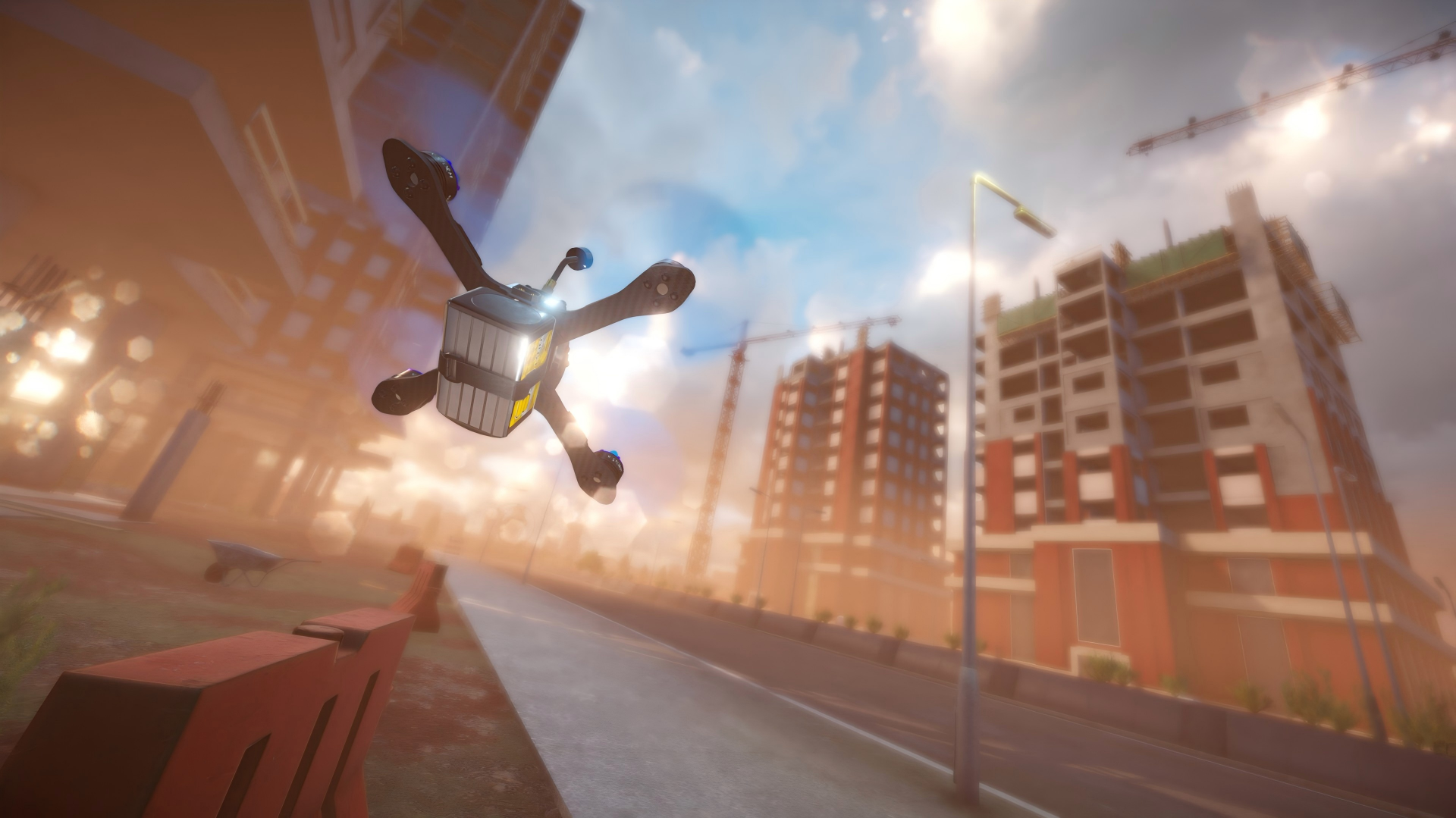
Fig. 1 Liftoff FPV Simulator
What Is An FPV Simulator
An FPV simulator is software that replicates the experience of flying a drone in real life. Using a controller, or even VR gear, pilots can practice maneuvers, refine reflexes, and learn to navigate complex courses—all without the risk of damaging a real drone.
Simulators are particularly useful for:
- Developing Skills Safely: You can try flips, dives, or tight turns without worrying about crashing.
- Building Muscle Memory: Hand-eye coordination and stick movements translate directly to real drones.
- Exploring Environments: Fly tracks or arenas you might not have access to in real life, from indoor gyms to cityscape.
- Saving Costs: Avoid expensive repairs and reduce wear on motors, props, and frames.
Whether you’re a beginner learning spatial awareness, an intermediate pilot refining racing lines, or a freestyle enthusiast chasing cinematic angles, simulators provide the controlled practice needed to grow.

Fig. 2 Velocidrone FPV Simulator
Popular FPV Flight Simulators
Liftoff primarily features the freestyle flight mode and FPV flying. In addition to realistic 3D terrain that features high-quality textures and lighting, it provides accurate drone physics and customized builds for users' own hardware. This software is suitable for both indoor and outdoor flights, thus providing good opportunities for newbies or freestyle pilots to combine entertainment with improving their skills. VR users can use their depth perception to fly in tight spaces.
Velocidrone is designed specifically for the purpose of racing. Its graphics provide good visibility but lack realism. Accurate physics and telemetry data contribute significantly to the quality of the training in the simulator. Moreover, there is an active Velocidrone community that contributes various track and mod files.
DRL Simulator is a simulation program specifically tailored for race leagues. Although the graphics may not be as impressive as other programs, DRL Simulator runs very smoothly, and offers the real-life DRL tracks. The physics in DRL Simulator are modeled after DRL drones and create organized obstacles to train pilots for competition. It is perfect for those just beginning in drone racing as well as professional flyers.
Liftoff VR Version and Velocidrone provide an additional element of depth that enhances the feeling of real speed. These simulators are especially helpful when flying indoors and training for freestyle.

Fig. 3 DRL FPV Simulator
Comparison Table of FPV Simulators
|
Feature |
Liftoff |
Velocidrone |
DRL Simulator |
VR Versions |
|
Main Focus |
Freestyle / Racing |
Racing |
Racing |
Freestyle / Racing |
|
Physics Accuracy |
High |
Very High |
High |
High |
|
Drone Customization |
Extensive |
Moderate |
Limited |
Moderate |
|
Visual Fidelity |
High |
Moderate |
Moderate |
High (VR) |
|
Real-World Skill Transfer |
High |
Very High |
High |
Very High |
|
Multiplayer |
Yes |
Yes |
Yes |
Yes |
|
Ideal Pilot Type |
Beginner → Intermediate → Freestyle |
Intermediate → Competitive Racer |
Beginner → Competitive DRL Racer |
Advanced / Indoor Freestyle |
|
Best Scenario |
Indoor/outdoor freestyle, cinematic |
Racing tracks, speed practice |
DRL league tracks, structured racing |
Tight spaces, immersive VR practice |
Choosing the Right FPV Simulator
First of all, one must establish their main objective in using an FPV simulator. If the aim is freestyle or cinematic flying, Liftoff is the most flexible option, and the addition of VR would add more depth. However, if the purpose is to take part in drone races, Velocidrone or DRL Simulator would be a better match since they focus on racing aspects and precise physics.
Having established the goal, it is necessary to think about the simulator's potential to improve practical flying skills. The degree of accuracy in simulating drone physics and the ability to customize the experience will affect the extent to which the practice will be helpful for flying in reality. Telemetry is particularly beneficial for racers because it enables lap analysis and improvements of racing lines.
The visual aspects also matter. In case you plan to fly inside and create some cinematographic pictures, high-fidelity visuals will make a huge difference because it will help you better measure distances between things. When it comes to racing flights, on the other hand, clearness and good visibility of the gate and obstacles should become the priorities rather than the high realism of the visuals, which means you do not really need a realistic-looking sim.
When it comes to choosing a simulator for drones, the existing experience and piloting skills matter as well. The beginners would benefit greatly from following a tutorial or from using simulators designed for beginners such as DRL or Liftoff. People who have gained some experience will be able to improve their skills by using Liftoff or Velocidrone. More experienced users should look for VR variants or even create customized maps for themselves in case they require more immersion.
Finally, the equipment and budget matters. It is obvious that all VR simulators require decent equipment while buying software, paying for mods, and buying extra gear could easily become a financial burden.
Summary
FPV flight simulators are essential tools for developing skills without risking your drone. Liftoff offers versatility and immersion, ideal for freestyle and cinematic flying. Velocidrone delivers precision for competitive racing, with telemetry and community tracks for skill refinement. DRL Simulator provides structured league-style training, while VR versions elevate immersion for tight-space practice.

Leave a comment
This site is protected by hCaptcha and the hCaptcha Privacy Policy and Terms of Service apply.