
LiPo (Lithium Polymer) batteries are the most prevalent and dependable type of battery when it comes to powering FPV drones. They provide a high energy-to-weight ratio which makes them suitable for both racing and freestyle drones. For one to utilize them safely and properly, he needs to comprehend how LiPos work, how to select them, and how to take care of them.
LiPo Battery Fundamentals: Voltage, Cell Count, Nominal vs Max Voltage
LiPo batteries are composed of individual cells, each with a nominal voltage of 3.7V. The total voltage of a battery pack depends on the number of cells connected in series, denoted by the “S” rating.
1S = 1 cell = 3.7V nominal
2S = 2 cells = 7.4V nominal
3S = 3 cells = 11.1V nominal
4S = 4 cells = 14.8V nominal
5S = 5 cells = 18.5V nominal
6S = 6 cells = 22.2V nominal
The maximum voltage of a cell when it is fully charged is 4.2V, while its minimum safe voltage level is 3.0V since deep discharge may cause permanent damage. In practice, when flying, people tend to land their drones once the voltage gets down to 3.5V per cell to prevent damaging their batteries.
It is important to learn about voltage since it is essential in determining the motor’s speed and overall drone performance. Voltage has an influence on the capacity to fly the drone for a long time and safely.

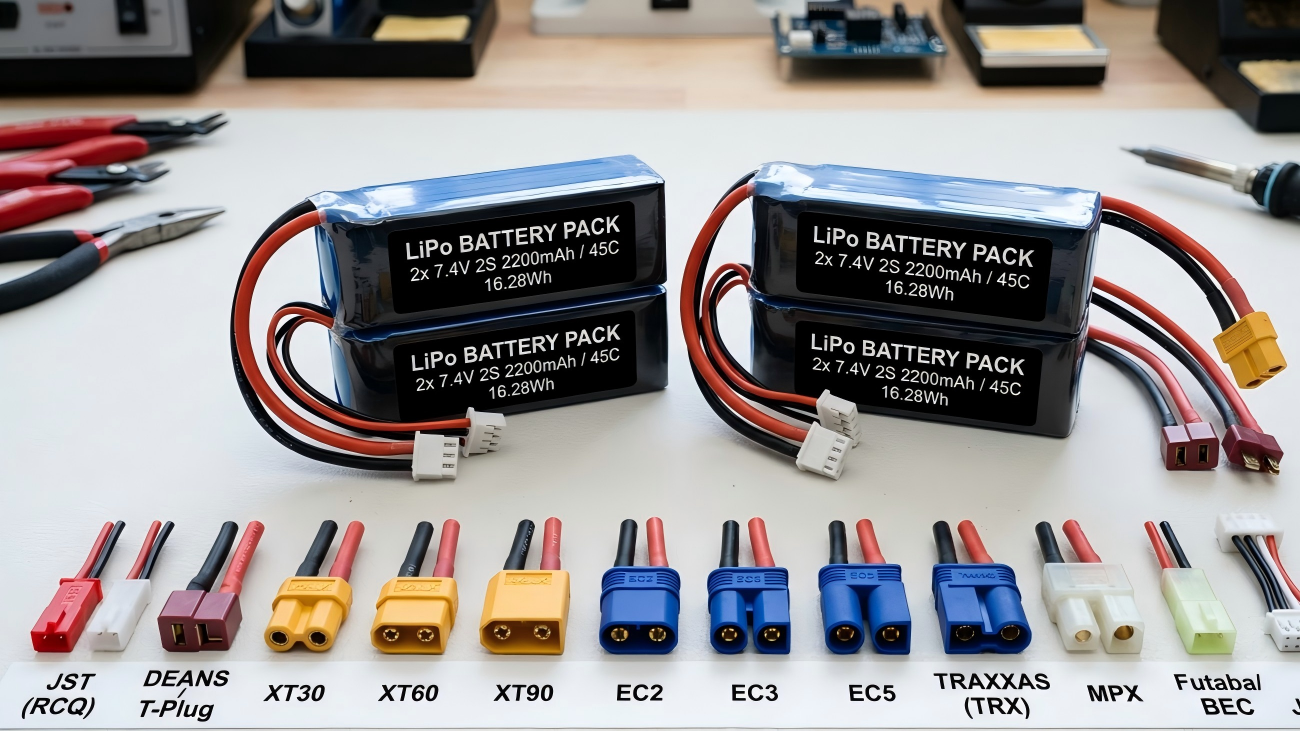
Fig. 1 FPV Battery Connectors
Capacity (mAh) : How to Calculate Expected Flight Duration
Battery capacity, measured in milliamp-hours (mAh), indicates how much current a battery can deliver over one hour before being depleted.
Example Calculation:
A 1300mAh battery delivering 1.3A will last 1 hour.
Drawing 2.6A reduces runtime to 30 minutes.
Drawing 39A reduces runtime to roughly 2 minutes.
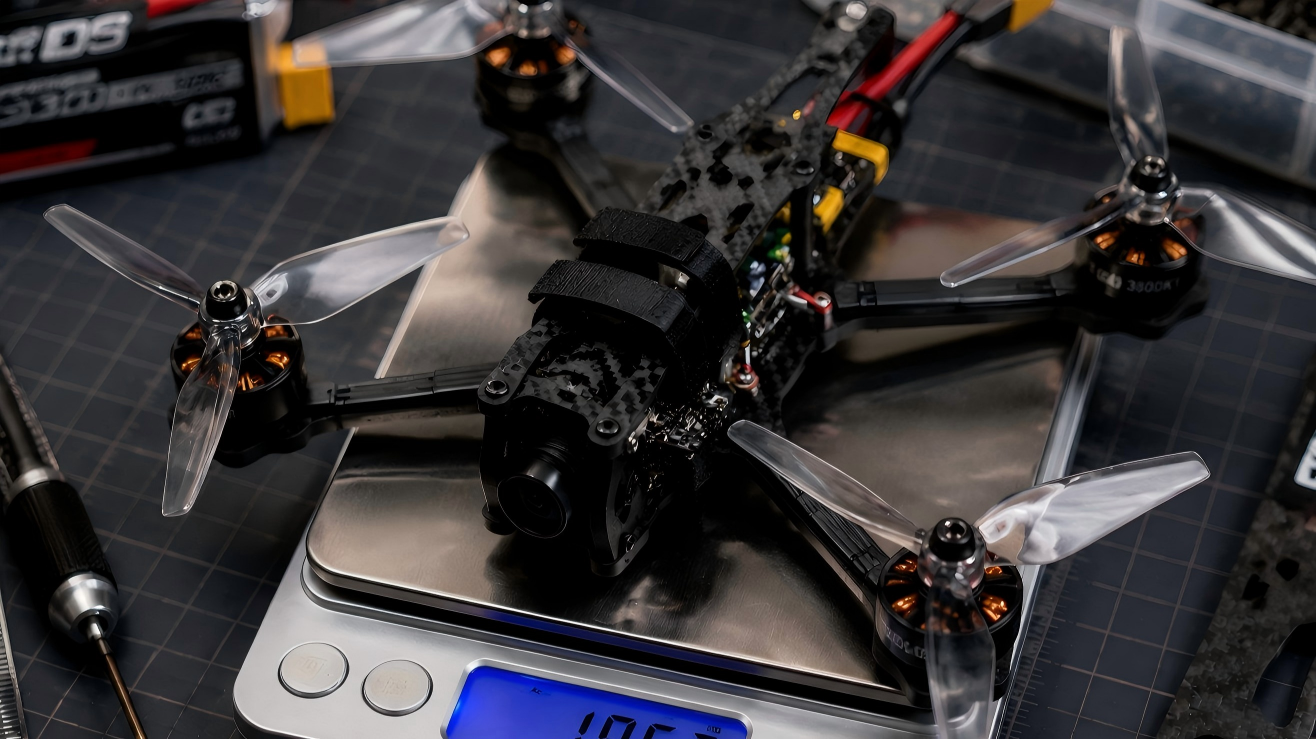
Increasing battery capacity extends flight time, but also increases weight. For FPV drones, weight is a major factor affecting flight agility, speed, and efficiency, so pilots must balance capacity with weight.

Fig. 2 FPV Battery Packs
C-Rating Explained: Continuous vs Burst Discharge
The C-rating defines the maximum current a battery can safely provide without damage.
Formula:
> Maximum Current (A) = Capacity (Ah) × C-Rating
Example: A 1300mAh (1.3Ah) 45C battery can theoretically provide 1.3 × 45 = 58.5A continuously.
Continuous vs Burst:
C Continuous is the highest level of current that is considered safe to pass through over a prolonged period.
C Burst is a temporary current which usually lasts for not more than ten seconds.
Going above the C rating will result in overheating, resistance build up, shortening of battery life, or even an explosion. Batteries with a high C rating will perform excellently in a race, or when handling heavily loaded drones.
Internal Resistance (IR): How It Affects Power Delivery
Internal resistance (IR) is the measure of the extent of a battery's opposition to the movement of electricity through its circuits. Low IR means that a battery can transmit power more effectively, while high IR may result in voltage drop, leading to slower motor speeds and sluggishness in the drone's response. As time passes, IR will gradually increase as a result of wear and tear; thus, IR can be used by pilots to gauge whether a battery needs to be replaced. Some situations that may lead to a faster increase in IR include deep discharge or charge, drawing currents higher than the battery's rating, excessive heating, and mechanical damage.
Battery Connectors: XT30, XT60, JST-XH, PH2.0, BT2.0 and Their Uses
FPV LiPo batteries have two types of connectors:
1. Discharge Connector: Thick wires that deliver power to the drone.
2. Balance Connector: Thin wires that allow the charger to monitor and balance each cell’s voltage.
Common connector types:
|
Connector |
Typical Use |
Cell Range |
Notes |
|
XT30 |
Tiny Whoops, micro drones |
2S–6S |
Smaller current, lightweight |
|
XT60 |
5″ and larger FPV drones |
3S–8S |
Standard for most FPV drones |
|
PH2.0 |
Small 1S–2S packs |
1S–2S |
Low-current, small connectors |
|
BT2.0 |
Small micro packs |
1S |
Budget or micro drones |
|
JST-XH |
Balance connectors |
All |
Standard for balancing |
Selecting the correct connector is essential for safety and performance. Always match the battery connector to your drone’s ESC and ensure the wires can handle the required current.
How to Choose a LiPo Battery
Selecting the right LiPo battery for an FPV drone involves the following considerations:
1. Compatibilty: Make sure the voltage and connector are compatible with the drone.
2. Capacity and Weight: You must strike the balance between flying time and manoeuvrability of the drone.
3. C Rating: It should cater to the needs of the current drone without being heavy.
4. Number of Cells: High number of cells offers high voltage but it adds to the weight.
5. Battery Life and Health: Check IR readings, swelling, and charging cycles of the battery before purchase.
> Recommendation: Go for trusted brand names with genuine C ratings and decent quality of cell.
FAQs about FPV LiPo Batteries
Q1: Can I drain my LiPo to 0V?
A1: No. Draining below 3.0V per cell will destroy your battery.
Q2: What is the difference between S and P?
A2: S connection boosts voltage; P connection boosts capacity. Combine them according to your needs.
Q3: My battery is bulging, why?
A3: Bulging means gases have formed because of overcharging, under-discharging, overheating, or old age. Get rid of bulging batteries.
Q4: How can I estimate my flying time with a drone?
A4: Divide your battery capacity (mAh) with your drone's average current consumption (mA) and get time in minutes.
Q5: Do I need high C rating?
A5: No. High C rating allows you to use high-power applications but weighs more. Determine how much is necessary for your drone.
Q6: Where should I store my batteries?
A6: At 3.8V per cell inside a fireproof bag. Don’t put batteries in hot or metallic environments..


Leave a comment
This site is protected by hCaptcha and the hCaptcha Privacy Policy and Terms of Service apply.