

Flying long-range FPV is exhilarating, but it demands careful preparation. Every component—from the frame to your antennas—affects distance, stability, and efficiency. The right choices can make a 10-kilometer flight feel effortless; the wrong ones can cut it short or turn your drone into a handful. Here’s how to think about the key parts and what to prioritize.

Fig. 1 Long Range FPV Drone
1. Frame: Long Range Drone’s Backbone
The frame determines how much weight your drone can carry, how stable it is in flight, and how efficiently it moves through the air.
For most long-range pilots, the first step should be a 7-inch DeadCat or an offset-X frame that can fly up to 15 minutes with a 6S build across a few kilometers efficiently. While looking to achieve longer flight times, pilots can choose bigger frames like 10-inch frames that can accommodate more batteries and fly even further but at the cost of more weight.
Also, heavier motors will be required for such frames as well as decreased portability. Thick carbon fiber should be used in frames as they hold heavier batteries and reduce vibrations for better video quality. The frame should have enough room for bottom batteries and top-mounted GPS modules.

Fig. 2 Long Range FPV Drone Kit
2. Motors and Propellers: Efficiency and Endurance
Motors and props decide how far and efficiently your long-range drone flies.
With a 7-inch frame, use low KV motors (1300–1500KV, 2806.5–2807 series) to avoid overheating while generating torque. Combine them with 7-inch two-blade props with 4.2–4.5 pitch for consistent cruising.
Using two-blade wide chord props consumes less power than using three-blade props. With slightly higher pitched props, one can cruise faster without overloading the motor. High stator motors are more heat-resistant, and well-balanced props minimize vibrations for stability. Carry spare props; props are the components that are mostly replaced on long-range drones.
3. Long Range FPV Batteries: LiPo and Li-Ion
Batteries define how far your drone can go.
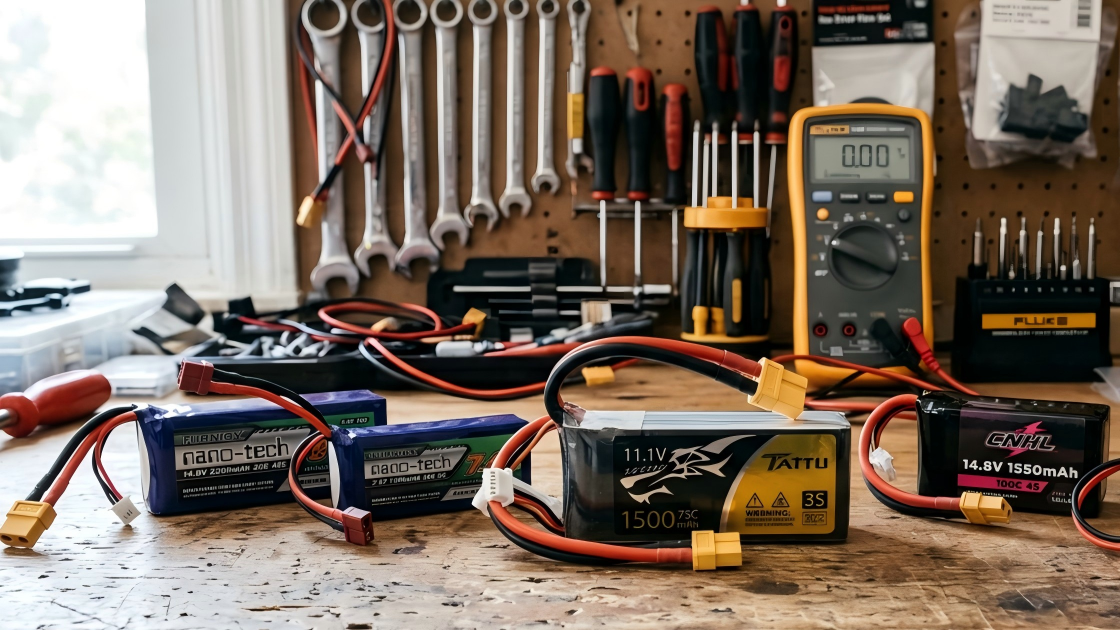
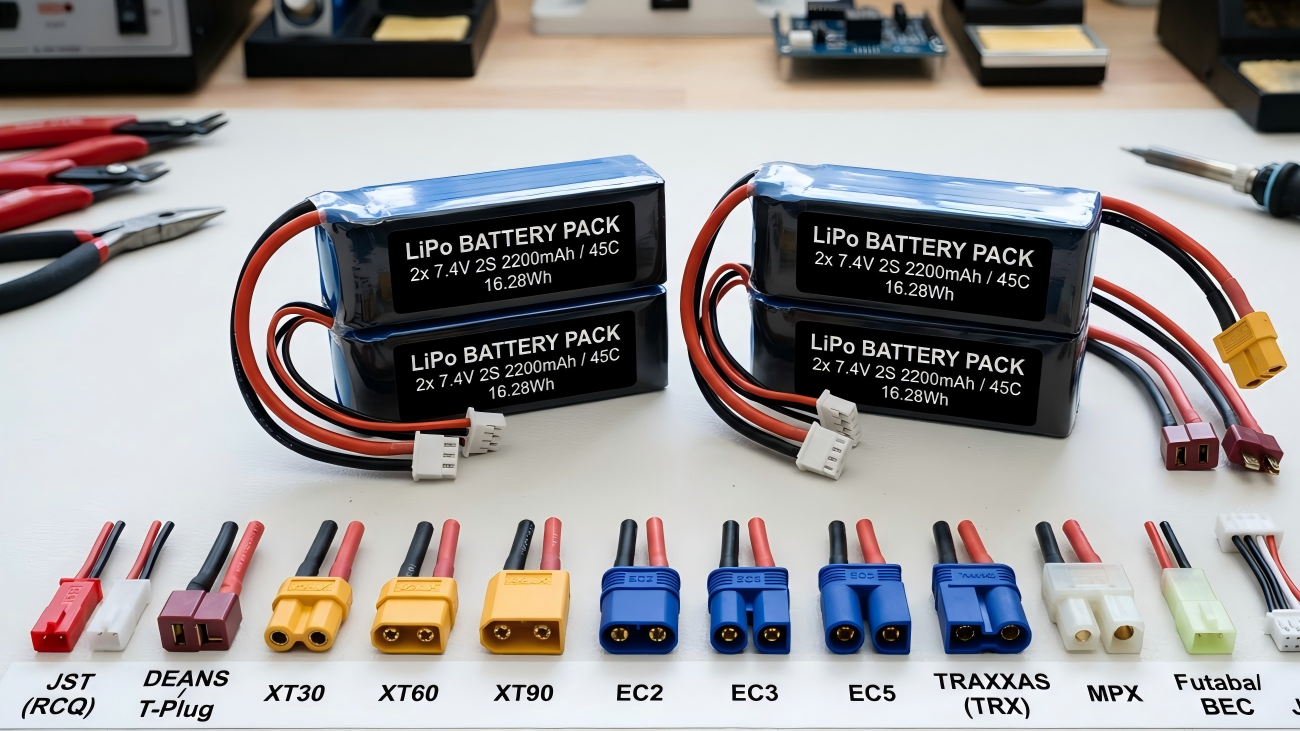
The LiPo battery packs (6S, 1500-2200mAh) react fast to changes in the throttle stick, providing an excellent burst of power, lasting 8-12 minutes of agile flight. The Li-Ion battery packs (4S-6S, 3000-6000mAh) excel in covering large distances and provide up to 15-25+ minutes of flight, but they react slowly and provide less power.
Remember to consider weight and center of gravity – the heavier battery pack will have longer flight time but will be harder to control. Always calculate your total weight compared to your engines and frame. Some flyers tend to switch between both Li-Po and Li-Ion.
4. Flight Controller and ESC: Brain and Muscle
It turns your commands into proper flight. Today’s F7 or H7 flight controllers are capable of running GPS recovery, telemetry, and advanced filters without becoming overloaded.
ESC modules provide power to your motors. With respect to long-range drone builds, you should consider installing a 4-in-1 ESC that supports up to 60A in order to supply clean power to bigger propellers and batteries. You may want to consider using DShot protocols to achieve good throttle response. Wiring, heat dissipation, and UART ports for GPS, VTX, and receivers are critical factors.
5. GPS Module and Rescue Features
The GPS module cannot be skipped if you wish to fly long distances. GPS modules which track from 8 to 20+ satellites offer a solid 3D position lock. Turn on Betaflight Rescue mode or Return-to-Home (RTH) if you wish to return your quad in case of lost video or control signal.
Make sure to set up your rescue altitude safely over any obstacles, and make test runs of short-distance rescue operations before going further. Failure of the GPS system over distance will end badly for you.
6. Video Transmission for Long Range FPV Drone
FPV on a long distance needs a quality and stable video transmission. Power of 1.6–2.5 watts of the VTX (analog or top digital one) allows to transmit signals through trees, hills, and buildings. It is important to have thermal stability because overheating results in a loss of power. Antennas of drones should be circularly polarized. It is useful to use patch+omni antenna diversity for goggles which provides direction and wider transmission.
Summary Table: Recommended Specs
|
Component |
Recommended Specs for Long Range FPV Drone |
|
Frame |
7-inch DeadCat (standard) / 10-inch (max lift) |
|
Motors |
2806.5–2807, 1300–1500KV (7-inch) / 3110, 800–1100KV (10-inch) |
|
Propellers |
7-inch two-blade, 4.2–4.5 pitch |
|
Battery |
LiPo 6S 1500–2200mAh (burst) / Li-Ion 4S–6S 3000–6000mAh (long cruise) |
|
Flight Controller |
F7 or H7 |
|
ESC |
4-in-1, 60A+ |
|
GPS Module |
High-performance, ≥8 satellites lock |
|
Video Transmitter |
1.6–2.5W analog or high-performance digital |
|
Antennas |
Circularly polarized omni (drone); patch + omni (goggles); optional helical |
Conclusion
Building a long-range FPV drone is part art, part engineering. Prioritize efficiency, balance, and reliability. Test everything at short range first, then gradually push your distance. With the right setup, your drone can safely and reliably explore beyond the horizon.

Leave a comment
This site is protected by hCaptcha and the hCaptcha Privacy Policy and Terms of Service apply.