
Flying FPV drones, remote-controlled planes, or other high-performance devices is exhilarating, but these hobbies come with responsibilities—especially regarding lithium polymer (LiPo) batteries. LiPo batteries are lightweight, high-energy power sources that deliver excellent performance, but they are also sensitive and can become dangerous if mishandled. Understanding how to store, charge, and handle LiPo batteries safely is critical not only to protect your equipment but also to ensure your personal safety.
1. Proper Storage of LiPo Batteries
Environment
LiPo batteries need to be kept in a dry and cool place, free from any sources of heat, light, or humidity. The recommended storage temperature is around 15°C to 35°C (62°F to 95°F), with humidity levels of 40% to 60%. Exposure to excessive cold or heat may affect the battery, leading to its malfunction or even a thermal runaway process.
It is also important to prevent damage caused by any mechanical forces acting on the battery. Avoid stacking batteries, since the risks for them include puncturing, crushing, and impact.

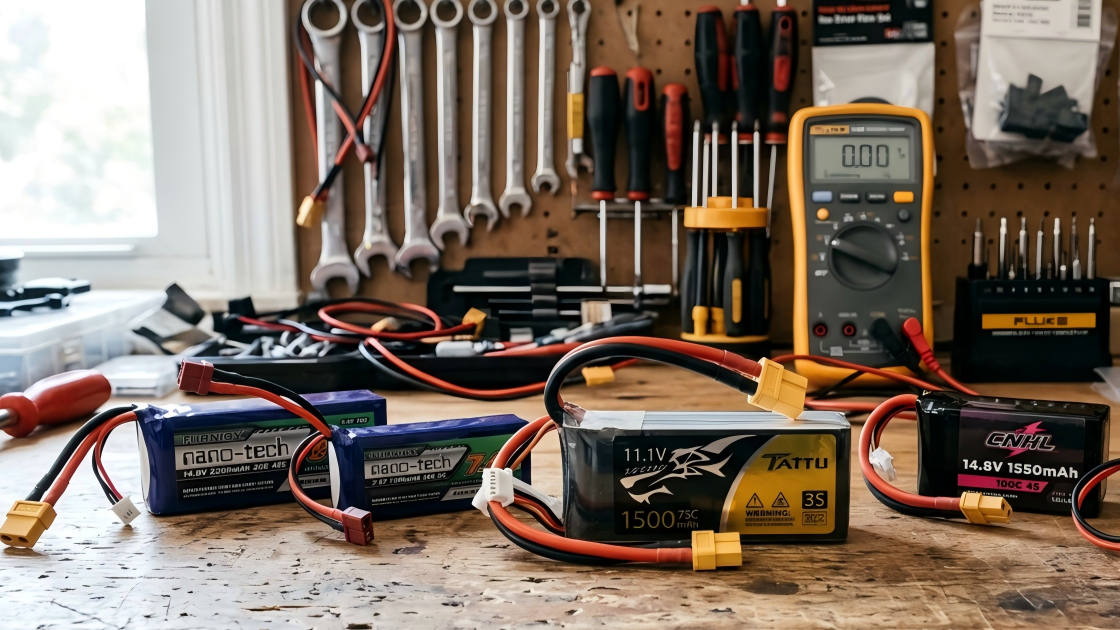
Fig. 1 Lipo Battery on the Table
Storage Containers
Even though there are dedicated storage boxes for LiPo batteries that are referred to as “Bat Boxes,” these are more for charging and transportation rather than for long-term storage purposes. The medium Bat Box might not have adequate space for storing several batteries, while its flimsiness cannot protect it from a potential thermal incident if one battery catches fire.
When it comes to long-term storage of LiPo batteries, most hobbyists suggest using a steel ammunition box. These are cost-effective, strong, and resistant to fire. When using the ammo box for storing your LiPo batteries, you need to start by taking out the rubber seal inside the lid. Having an entirely airtight case might cause gases emanating from the batteries to accumulate, resulting in excessive pressure. You can create some vent holes within the lid or sides of the box for extra safety, but this is not always necessary.

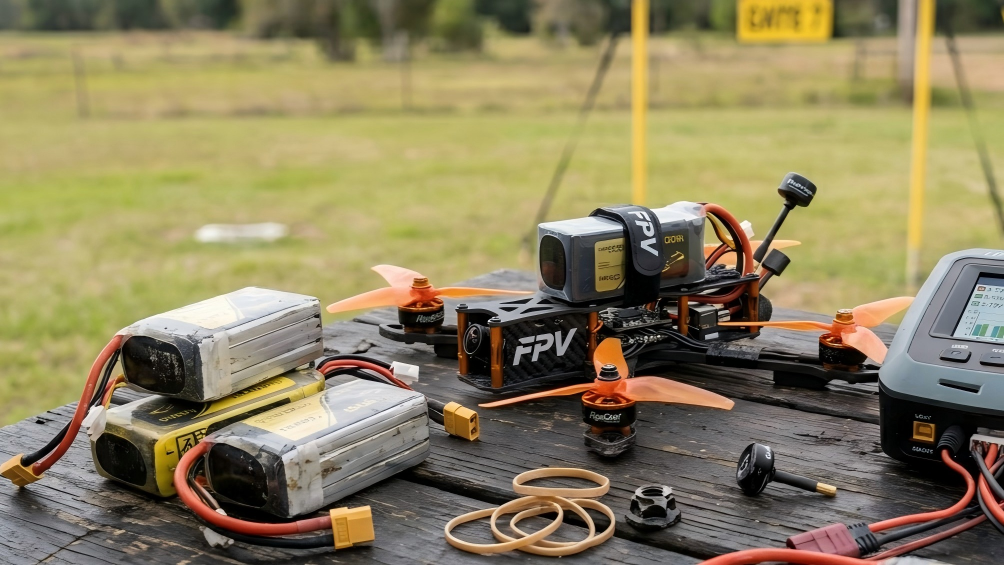
Fig. 2 Lipo Battery Packs
Storage Voltage
LiPos must never be stored at full charge. Rather, they need to be reduced to a storage voltage of around 3.8V to 3.85V. In case the LiPo battery is under 3.8 volts, bring it up to the required voltage. In case the battery exceeds 3.85 volts, bring it down to the required voltage by discharging it with a suitable charger or even in your equipment.
For some modelers, a resistance load such as a 20-40 ohm power resistor can be used to discharge the LiPo. The resistance will heat up while the battery will stay cool, guaranteeing a safe discharge process. Most LiPo chargers feature a storage mode that will set the battery’s voltage at the right level for storing.
Long-Term Maintenance
Even if LiPo batteries are kept correctly, they should go through periodic maintenance. Once every three months, the batteries need to be charged and discharged to ensure that they do not lose capacity because of lack of use. Always remember to stick to safe charge limits.
2. Charging LiPo Batteries Safely
Charging is where most LiPo accidents occur. Proper charging practices can dramatically reduce risks.
Charger Selection
Always use a charger designed for LiPo batteries. Multi-chemistry chargers can work if set to LiPo mode. Never use generic chargers not rated for LiPo batteries, as improper voltage or current could damage the cells or cause a fire.
Correct Charging Procedure
- Set the number of cells (S rating) correctly. This is usually done automatically by modern chargers, yet confirmation is essential.
- Set the right amount of charging current. As a general rule, you should choose between 0.5C and 1C, where C stands for the capacity of your battery. For instance, charging a 1S 450mAh battery at 1C means using 0.45 amps. Greater currents may be considered up to 1.5C but only under careful supervision. Exceeding the rating maximum is strictly prohibited.
- Be aware of the battery's temperature. In case you cannot hold the battery, lower the charge rate or stop charging the device.
- Always supervise charging processes. The majority of fires happen when the charging process is not supervised.
- Make sure that the area where you charge is free from any combustible materials, and use a LiPo bag when necessary.
- Never charge your battery immediately after it was being used. Charging an internal cell that still remains hot significantly increases the chance of a fire outbreak. Let your battery cool down first.
- Detach your batteries from the device you charge. Charging the batteries while keeping them installed increases the risk of fire or damage.
3. Using LiPo Batteries Correctly
Depth of Discharge
It is imperative that LiPo batteries are never drained of their charge. The advised lowest voltage level for each cell is 3.4 volts. Anything lower than this will result in damage to the battery that cannot be reversed. In the case of a 1S battery, the advised minimum voltage level is 3.4 volts per cell. In the case of a 2S battery, this becomes 6.8 volts, a 3S battery requires 10.2 volts, while a 4S battery requires 13.6 volts. High current operation must also be avoided by not sustaining full throttle for more than ten seconds.
Temperature Monitoring
Avoid operating LiPo batteries at temperatures above 60°C. High throttle or extreme conditions should be monitored carefully. Stop using the battery if it becomes hot to touch, swells, or otherwise behaves abnormally.
Pre-Use Inspection
Before every flight or use, check your LiPo batteries for swelling, physical damage, or leaks. Never use a compromised battery; replace it immediately to prevent accidents.
4. Disposal of LiPo Batteries
LiPo batteries have a lifespan of 350–500 charge cycles under proper care. When a battery shows signs of degradation—such as rising internal resistance, inability to hold charge, excessive heat, or swelling—it is time to replace it.
To safely dispose of LiPo batteries:
Fully discharge the battery to storage voltage or below.
Place it in a metal container or LiPo disposal bag.
Take it to a certified battery recycling facility. Do not throw LiPo batteries in household trash.
Ultimately, most LiPo incidents are preventable. The key is to respect their chemical energy, monitor usage, and follow proper charging and storage protocols.
Summary
LiPo batteries are highly efficient, lightweight, and ideal for high-performance hobbies, but they demand respect. Safe handling involves understanding the risks, using proper storage containers such as ammo boxes or fire-resistant bags, monitoring charging closely, storing at the correct voltage, and performing regular maintenance. By adhering to these practices, hobbyists can enjoy the performance advantages of LiPo batteries while minimizing risk.
LiPo safety is not about fear—it’s about knowledge, vigilance, and good habits. With the right procedures, these powerful batteries can be stored, charged, and handled safely for years of enjoyable and worry-free flight.


Leave a comment
This site is protected by hCaptcha and the hCaptcha Privacy Policy and Terms of Service apply.