
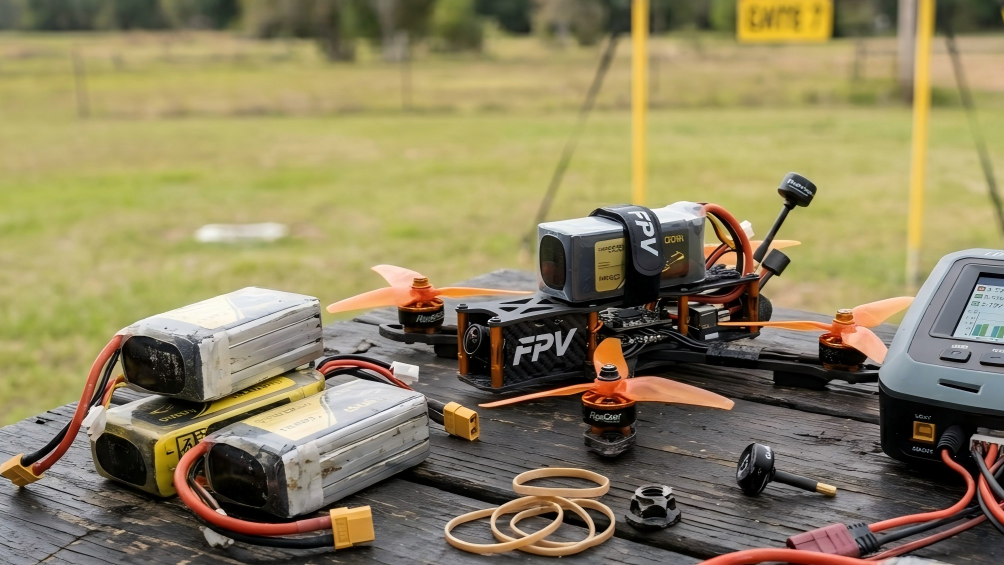
You’ve watched countless FPV videos of drones weaving through forests, racing through gates, and flipping effortlessly in midair—and now it’s your turn. But unlike watching online, real FPV flying is unforgiving: every input matters, and mistakes happen faster than you can react.
This guide uncovers the mistakes almost every beginner makes—some subtle, others obvious—and shows how to avoid them. By learning from these pitfalls before you even power up, you’ll save money, frustration, and a lot of unnecessary crashes.
1. Skipping Simulator Training
It’s tempting to jump straight into the open field with a real drone in your hands. After all, videos make it look easy. But FPV drones respond instantly to every minor stick movement. Without prior practice, even the smallest error can send your craft plummeting into the ground.
The most advisable course would be to begin training within a simulator program, such as VelociDrone or Liftoff, which accurately simulate the physics of FPV flight. Start with some basic maneuvers, such as hovering, gentle turning, and navigation around simple obstacles. Slowly advance to more advanced maneuvers, learning first to hover successfully, then to fly through gates, and finally to perform flips.
Simulator training is not only important for learning good flying technique, but it will also help train your mind and body to cope better with the speed at which you will have to react while flying an FPV.
Related reading: A LIST OF FPV FLIGHT SIMULATORS AND HOW TO CHOOSE

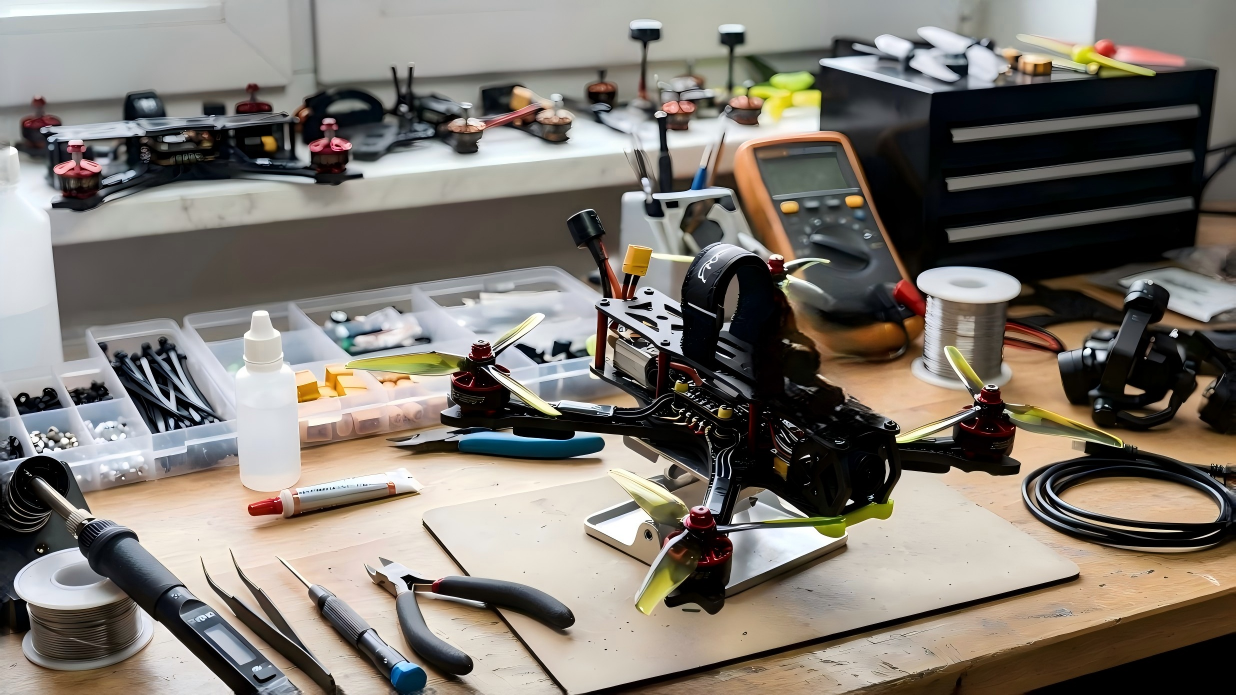
Fig. 1 FPV Drone Safety
2. Neglecting Battery Health
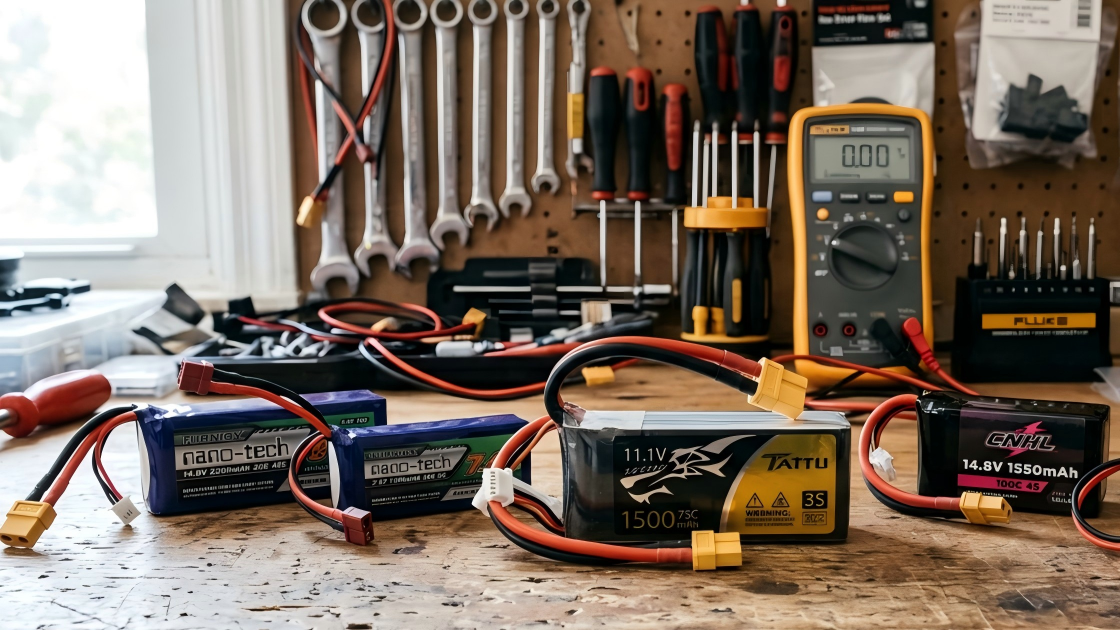
LiPo batteries are great power sources, but they are very sensitive. A lot of people don't realize how sensitive and delicate they are and end up flying the drone until it crashes out of the sky or keep their batteries fully charged for weeks on end. The results can vary from battery malfunction to actual burning.
There are only a few guidelines that one should follow, like monitoring the voltage, making sure that per-cell voltage does not drop below 3.5V. If one doesn't plan on using the battery for at least 24-48 hours, they should keep it charged at 3.8-3.85V per cell. Batteries should always be stored in a cool, dry place, away from sunlight and fire.

Fig. 2 FPV Battery Safety
3. Ignoring the Environment
Although FPV drones are nimble in the air, they remain vulnerable to their environment. Unexpected objects like slender tree limbs, electrical lines, or reflective surfaces may suddenly become a threat. Operation around industrial regions or buildings creates electromagnetic interference that could throw off your drone’s navigation.
Prior to every take-off, examine the landscape on foot. Pinpoint all potential threats, analyze signal strength, and select appropriate flying zones. In cases where regulations demand, assign a visual observer to keep constant VLOS (visual line of sight). Initially, operate your drone in open spaces such as meadows or parks; then proceed to forested or urban environments.
4. Mismanaging Video and Radio Signals
An FPV feed provides you with vision from the skies. Poor signal management may cause poor quality video feeds, signal interference, and total signal failure. Newbies usually neglect the positioning of antennas, transmitter power settings, and channel synchronization—all important details that will make or break your flight.
Stay away from obstacles such as the battery and frame parts made from carbon fiber. Set your transmitter power according to where you're flying; too much indoors will give you ghosting issues. Fly on coordinated channels when you are with other people so you won’t end up video stomping on each other. Signal management is just as important as stick management.
5. Panic Throttle
One of the quickest ways to make a collision worse is by hitting the throttle when you lose control. The higher the speed, the more likely an error will be made, damage will occur from impacts, and the drone will be lost.
Disarming is the best way to go. Mastering how to land a drone safely without damaging it is essential. Practicing emergency situations in the simulation environment helps you master your maneuvers and disarms. Create a list of pre-flight checklists that includes throttle reactions, disarming procedures, and emergency responses.
Beginner vs. Professional: What Sets Them Apart
Performance differences between beginners and professionals go beyond raw speed. Professionals excel in path planning, peripheral vision usage, and anticipatory control (Pfeiffer & Scaramuzza, 2021).
|
Feature |
Beginner |
Professional |
|
Gaze Behavior |
Focuses on drone or immediate front |
Looks ahead to anticipate trajectory |
|
Peripheral Vision |
Limited use |
High awareness for obstacles and competitors |
|
Maneuvering |
Over-corrections common |
Smooth, optimized racing lines |
|
Recovery |
Panic-driven |
Rapid, calculated adjustments |
Developing peripheral awareness and predictive thinking in flight dramatically improves reaction time and reduces crashes.
Comprehensive Safety Checklist
Before arming your FPV drone, ensure compliance with safety and legal requirements:
- Registration: Complete mandatory tests, such as TRUST in the US (University of Florida, 2025).
- Altitude Limits: Maintain ≤400 feet AGL.
- Weather Check: Avoid rain, snow, or high humidity. Moisture can short electronics instantly.
- Failsafe: Set failsafe mode to "Drop" so the drone halts if it loses radio connection.
- Protective Gear: Consider goggles, gloves, and a safe perimeter around the flight zone.
Conclusion
FPV flying is as much mental as it is physical. The difference between repeated crashes and smooth, confident flights often comes down to preparation, observation, and practice. By respecting the lessons above—simulator training, battery care, environmental awareness, signal management, and controlled response to mistakes—you’ll save money, frustration, and countless unnecessary crashes. More importantly, you’ll build the confidence to enjoy FPV as it was meant to be: thrilling, precise, and endlessly rewarding.
References
CLAWS. (2025). The art and science of combat flying of FPV armed drones. CLAWS Issue Brief, (469), 1–10.
DRS Digital Library. (2026). Proto-flighting in the wild: A creative technologist approach to drone prototyping.
Eksploatacja i Niezawodnosc – Maintenance and Reliability. (2026). Reliability of unmanned aerial vehicles in the context of selected factors.
Pfeiffer, C., & Scaramuzza, D. (2021). Expertise affects drone racing performance. arXiv.
University of Florida. (2025). NaviGATORing the skies: Legal aspects of UAV operations. IFAS Extension.

Leave a comment
This site is protected by hCaptcha and the hCaptcha Privacy Policy and Terms of Service apply.