
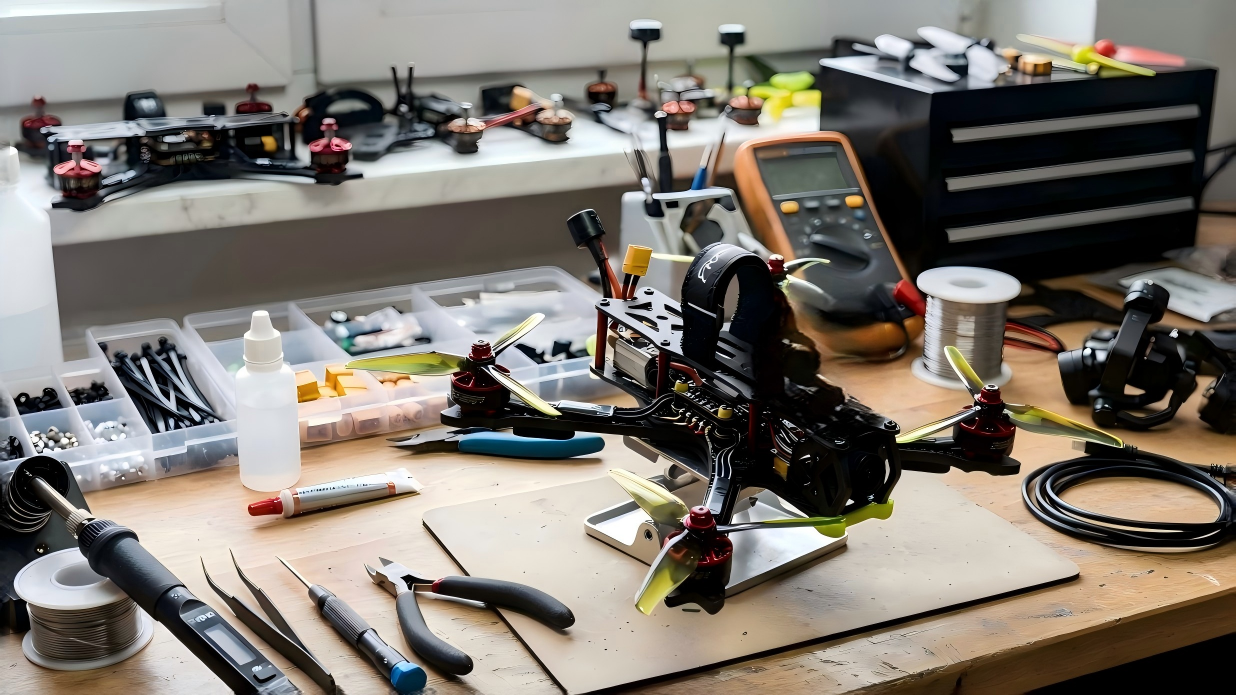
FPV quads are complex machines. They combine high-speed motors, sensitive electronics, and precise software tuning. A single misstep—loose wiring, a bent propeller, or a misconfigured flight controller—can cascade into multiple problems. However, most issues are predictable and fixable once you know where to look. This guide will walk you through common FPV drone issues, explain why they happen, and show practical ways to solve them so your flights stay smooth and reliable.

Fig. 1 FPV Drone Troubleshooting
FPV Motor Problems: Jitters, Stalls, and Unexpected Spins
The motors are the heart of your FPV drone. When they run smoothly, everything feels effortless, almost magical. But when a motor jitters, stalls, or spins in the wrong direction, it can throw your quad into chaos.
The first step in diagnosing motor issues is a visual inspection. Check all wiring for loose connections or frayed wires. Make sure your solder joints are clean and solid. If your flight controller allows it, test motor rotation directions digitally before powering up. Motors that continue to behave erratically may be suffering from a failing ESC or internal damage. Swapping the motor onto a known working ESC—or vice versa—can help isolate the problem. Often, identifying which component is at fault is half the battle.
FPV ESC Interference and Electrical Noise
ESC systems are what provide the required energy to your motors, but they could also produce an electric field of interference which can affect other components, especially your FPV setup. Static in the picture or erratic motor performance is usually the result of electrical noise produced by ESCs.
The best way to counteract that is by installing a low ESR capacitor into the power distribution circuit board. Low ESR capacitors help in minimizing the voltage peaks in order to avoid interference that can cause static or jittery motors. Proper wiring and insulation of ESC cables will play a big part too.

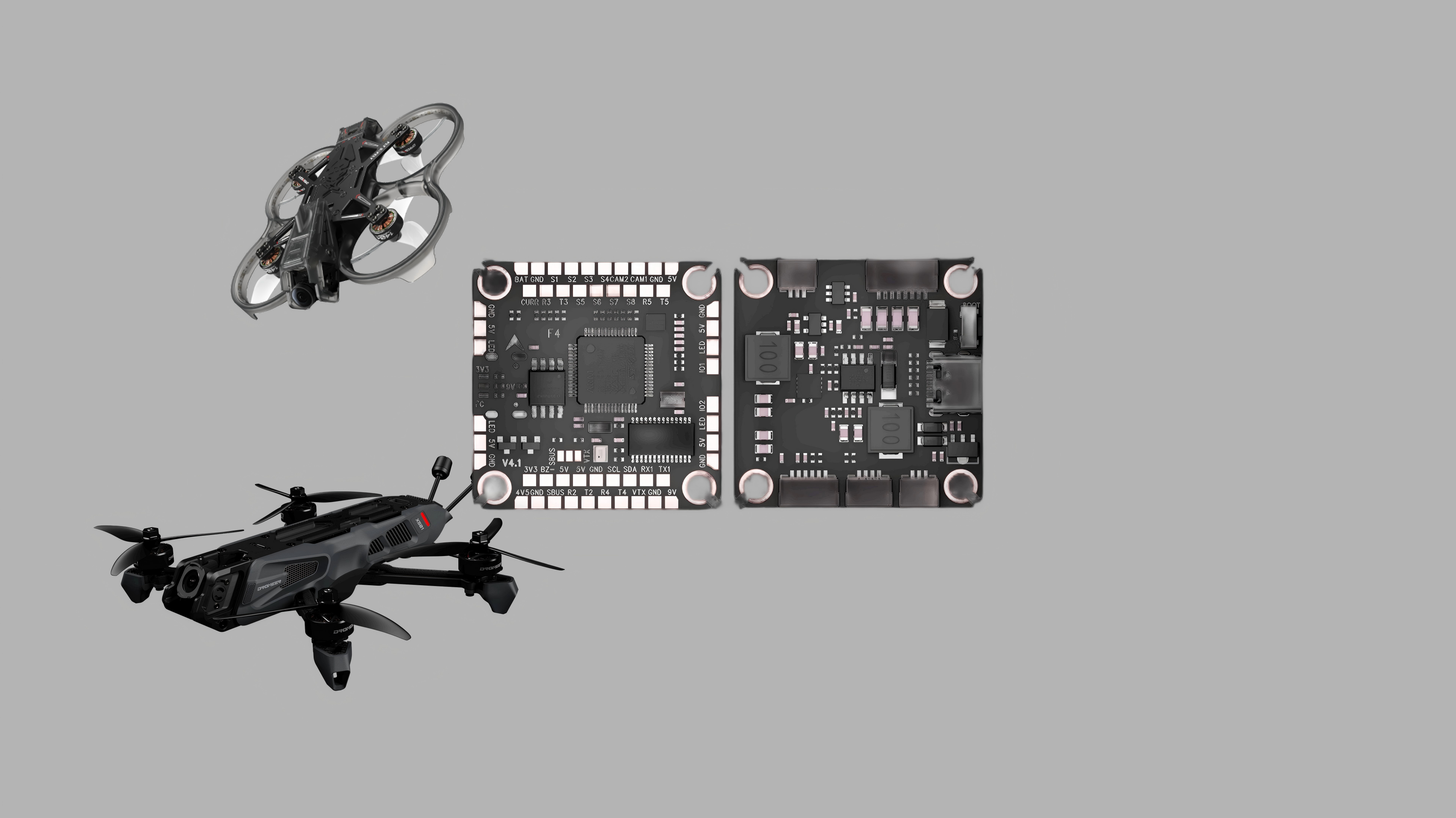
Fig. 2 FPV Drone Components Diagram
Vibrations and the “Jello Effect”
Vibrations may seem like a small issue, but they can affect your FPV drone’s performance in significant ways. For example, any tiny imbalance on one of the propellers will give you a “jello effect” on your video stream that makes flying difficult.
Imbalance of the propellers is usually the main culprit of such issues. Inspect all the props to look for bent blades, cracks, or other types of damage. You should balance your propellers and consider replacing them if the process proves to be too difficult. Be sure to mount your camera and VTX wiring properly.
FPV Battery Issues: Voltage Drops and Connection Problems
Having a stable power supply is important when doing FPV flights. If there is a drop in voltage during the flight, the motors, flight controllers, or even the entire FPV setup may malfunction due to poor-quality or old batteries.
It is crucial to test the battery before flying. If you notice that it is swollen or has irregular voltage output or discharge rate, it is best not to use it. Make sure that your XT60 or JST plug connections are secure, as any loose connections might lead to unstable power.
FPV Flight Controller and PID Tuning
Today’s flight controllers are robust; however, it takes proper calibration to get the best out of them. Parameters such as the PID settings, filtering, and firmware version can influence how your drone flies. Improperly calibrated flight controllers could result in wobbling, unpredictable flight patterns, or overheating of the motors.
If your drone experiences jittering or instability, the first thing to look at is the flight controller calibration. All flight controllers come with preset PID values that are safe for most quads. However, advanced and heavier drones might need tweaking. Watching the temperature of the motors during tuning is very important since an overly aggressive D term filter can introduce more noise, whereas a weak filter would create sluggishness.
Receiver and Antenna Problems
The FPV drone depends on the effective transmission and reception of signals. This means that a loose antenna, incompatible polarization, or faulty installation could lead to the loss of signals altogether.
Make sure that the antennas are properly polarized and aligned with the transmission from the transmitter. Diversified antennas with dual antennas are recommended since they enhance the reliability of the signal, especially when operating in an environment with many obstacles. Make sure that the antennas are well secured from rotating parts.
FPV Camera and Video Transmitter Issues
A poor FPV feed often comes from the camera or VTX itself. Black screens, static lines, or dropped frames can indicate a failing camera, an overheated transmitter, or insufficient power.
Overheating is particularly common with small VTX modules transmitting at high power. Mounting the VTX in a ventilated area, or adding a small heatsink, can prevent thermal throttling and improve signal reliability. If video issues persist, verify that the camera and VTX share a common power ground, and inspect all solder joints and connectors for signs of wear.
Frame and Structural Problems
Crashes are part of FPV flying, but even minor collisions can create hidden issues. A bent arm, loose screws, or warped frame can affect flight stability, motor alignment, and propeller balance. Inspect your frame after every crash, tighten all fasteners, and check for hairline cracks. Replacing damaged components promptly prevents small issues from becoming bigger problems mid-flight.
Summary Table
|
Problem |
Symptoms |
Quick Fix |
|
Motors Not Spinning / Wrong Direction |
Motor doesn’t spin, spins backward, or jitters |
Check wiring and solder joints, test motor direction in Betaflight, swap motor to isolate hardware issues |
|
No FPV Video / Signal Loss |
Black screen, static, flickering feed |
Check camera/VTX soldering, ensure correct voltage, inspect antennas, try different channel or VTX |
|
ESC Overheating / Failure |
Motors cut out, smoke, drone shuts down |
Verify ESC rating vs motor/battery, reflow solder joints, improve airflow, adjust BLHeli settings |
|
Drone Drifts / Flips / Won’t Arm |
Unstable flight, unexpected flips, motors won’t start |
Mount flight controller level, check wiring, restore firmware defaults, verify prop orientation |
|
Propeller Issues |
Excess vibration, poor lift, crashes |
Replace damaged/unbalanced props, ensure correct orientation, match prop size/pitch to motor/battery |
|
Receiver / Control Signal Loss |
Intermittent control, delayed response, dropped signal |
Check antenna placement, replace damaged antennas, ensure receiver compatibility, update firmware |
|
Battery Problems |
Short flight time, mid-flight shutdown, voltage errors |
Check battery voltage and C rating, inspect connectors, test battery under load |
|
Frame / Structural Issues |
Loose screws, cracks, vibration affecting flight |
Inspect frame for cracks, use threadlocker on screws, secure components, reduce vibrations with dampeners |
Conclusion
FPV drones are complex machines that demand careful attention to detail. While issues are inevitable, most can be resolved with methodical troubleshooting and proper maintenance. By understanding why motors fail, props vibrate, ESCs overheat, receivers drop signal, or batteries underperform, pilots can take corrective action and maintain reliable flight.

Leave a comment
This site is protected by hCaptcha and the hCaptcha Privacy Policy and Terms of Service apply.