
In FPV drones, every extra gram directly impacts flight performance. Added weight reduces flight time, agility, and overall responsiveness, which matters whether you’re racing, flying freestyle, or building a long-range cruiser. Even small reductions in mass can make your quad feel more lively, extend its airtime, and help you stay within regulatory limits such as the U.S. 250-gram threshold that exempts drones from registration and Remote ID requirements.
Why Every Gram Counts
Thrust-to-Weight Ratio
FPV drones rely on a high power-to-weight ratio to perform efficiently. For a typical 5-inch racing quad, this ratio ranges from 5:1 to 8:1. Each additional gram forces the motors to generate more thrust, which increases current draw, heats up the motors and ESCs, and drains the battery faster. The net result is shorter flights, reduced efficiency, and greater stress on components.
Moment of Inertia
Heavier drones are slower to accelerate, decelerate, and change direction. This sluggishness can make acrobatic maneuvers less precise, forcing pilots to raise PID gains to compensate. Higher PID settings increase stress on the motors and frame, which can lead to vibrations, overheating, or even structural fatigue over time.
Regulatory Limits of FPV Drone
In the United States, keeping your drone’s all-up weight below 250 grams can save you from FAA registration requirements. Even if you aren’t racing, staying light gives you more flexibility to fly recreationally with fewer legal obligations.

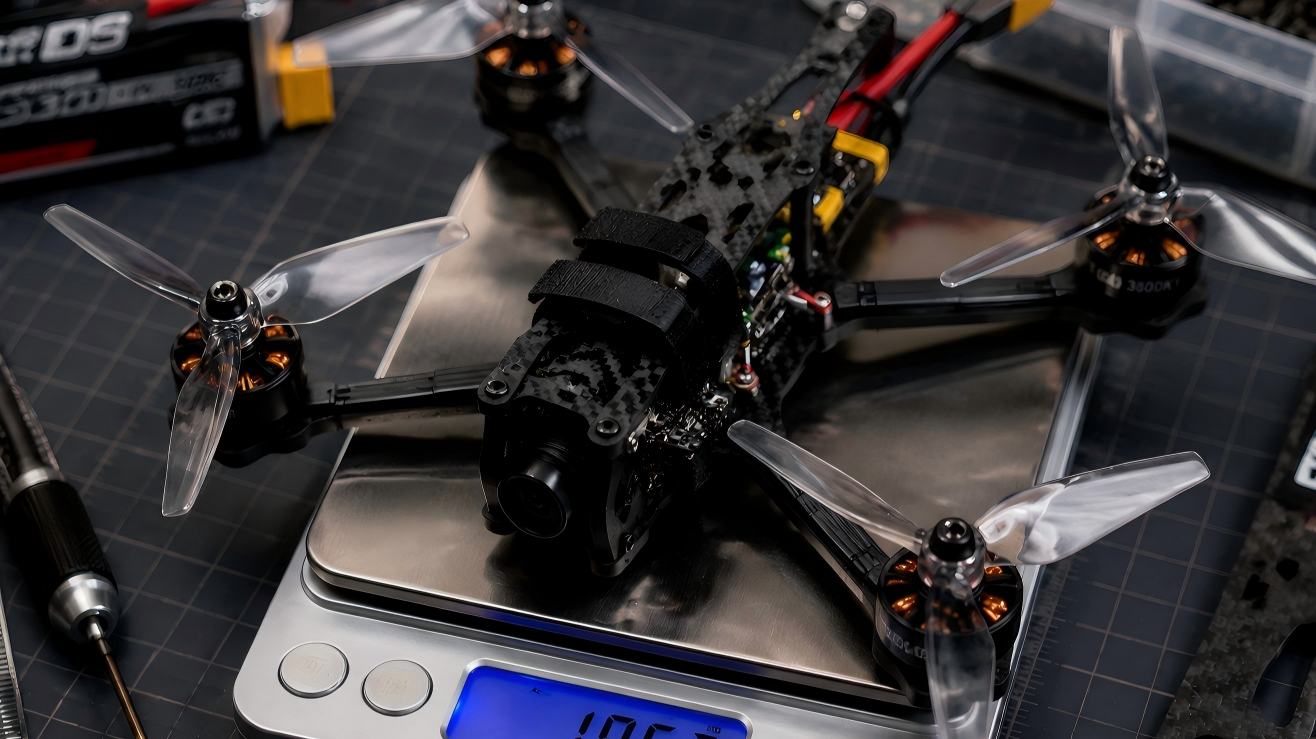
Fig. 1 Weighting FPV Drone
Where to Reduce Weight
Optimizing your fpv drone for weight doesn’t mean compromising safety or durability. Instead, focus on the areas with the highest mass-to-performance impact:
1. FPV Batteries
Batteries can be the heaviest item on an FPV drone. By opting for a slightly smaller battery or one with less capacity, you will be able to fly more dynamically. For acro and freestyle quadcopters, the reduced flight time can be compensated for by faster maneuvers.
2. Hardware
Standard steel screws, stand-offs, and connections have their weight. Replacing steel components with aluminum or titanium counterparts can help reduce the weight by a few grams. In addition, cutting cables like those for the motors, cameras, and VTXs to exact measurements will save on weight.
3. Peripherals
Optional devices such as GPS units or action cameras, like GoPros, can increase the weight by 10 to 15 grams, or even more. When you design your fpv drone for freestyle or racing purposes only, omitting these accessories helps lighten the load right away.
4. 3D Printed Parts
Most pilots prefer TPU or PLA mounts for cameras, antennas, and VTX units. Slimming down these components will allow you to save some weight, as they are unnecessary. Additionally, making the printed components lighter will help you maintain a balanced center of gravity.

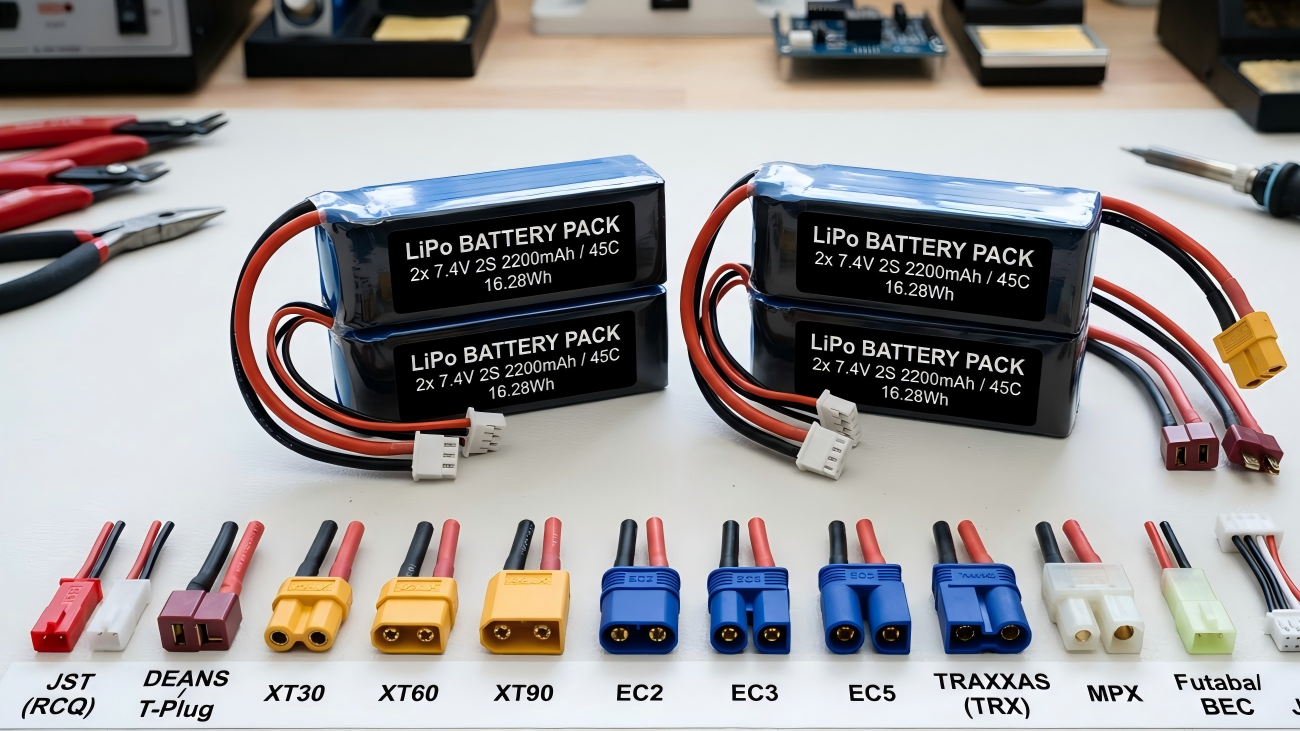
Fig. 2 Weights of Different FPV Drones
Practical Tips for Weight Reduction
Measure your drone’s total all-up weight after assembly, including the battery.
Focus on components that are heavy relative to their utility for your flying style.
Use a digital scale to track weight savings as you swap parts or redesign mounts.
Remember that even a 5–10 gram reduction can noticeably improve throttle response and maneuverability on a 250–400 gram freestyle quad.
Weight-Optimized FPV Build Comparison Table
Here’s a compact, comparison-style weight-reduction table for FPV drones across 2.5-inch, 5-inch, 7-inch, and 10-inch sizes. It highlights key areas to optimize weight and what’s practical for each size.
|
Component |
2.5-inch Micro |
5-inch Standard |
7-inch Long-Range |
|
Frame |
2.5" carbon fiber, minimal |
5" carbon fiber, 3–4mm thick |
7" DeadCat / Offset-X, 6mm+ carbon |
|
Motors |
1104–1306, 3000–4500KV |
2205–2306, 2300–2750KV |
2806.5–2807, 1300–1500KV |
|
Propellers |
2.5–3" 2-blade, balanced |
5" 2-blade, wide-chord, balanced |
7" 2-blade, 4.2–4.5 pitch |
|
Flight Controller |
F4 micro |
F4/F7 |
F7 / H7 |
|
ESC |
4-in-1, 20–25A |
4-in-1, 30–50A |
4-in-1, 60A+ |
|
Battery |
2S–3S LiPo, 300–450mAh |
4S–6S LiPo, 650–1500mAh |
6S LiPo 1500–2200mAh or 4S–6S Li-Ion 3000–6000mAh |
|
Camera |
Tiny FPV micro |
Standard FPV (Runcam / Caddx) |
FPV + lightweight action cam optional |
|
VTX |
25–50mW, lightweight |
200–600mW, lightweight |
1.6–2.5W, analog or digital |
|
Antennas |
Lightweight omni |
Omni + patch |
Circularly polarized omni + patch |
|
Connectors / Wiring |
XT30, short wires |
XT60, trimmed wires |
XT60 / JST, trimmed |
|
Approx. Total Weight |
~100–120g |
~350–420g |
~650–900g |
Conclusion
Every gram counts in FPV drones. By carefully evaluating batteries, hardware, peripherals, and 3D printed components, pilots can make targeted reductions that improve flight time, responsiveness, and overall performance. Whether you’re building a racing quad, an acro freestyle machine, or simply trying to stay under legal weight limits, managing weight is the single most effective way to get a better-flying drone.

Leave a comment
This site is protected by hCaptcha and the hCaptcha Privacy Policy and Terms of Service apply.