
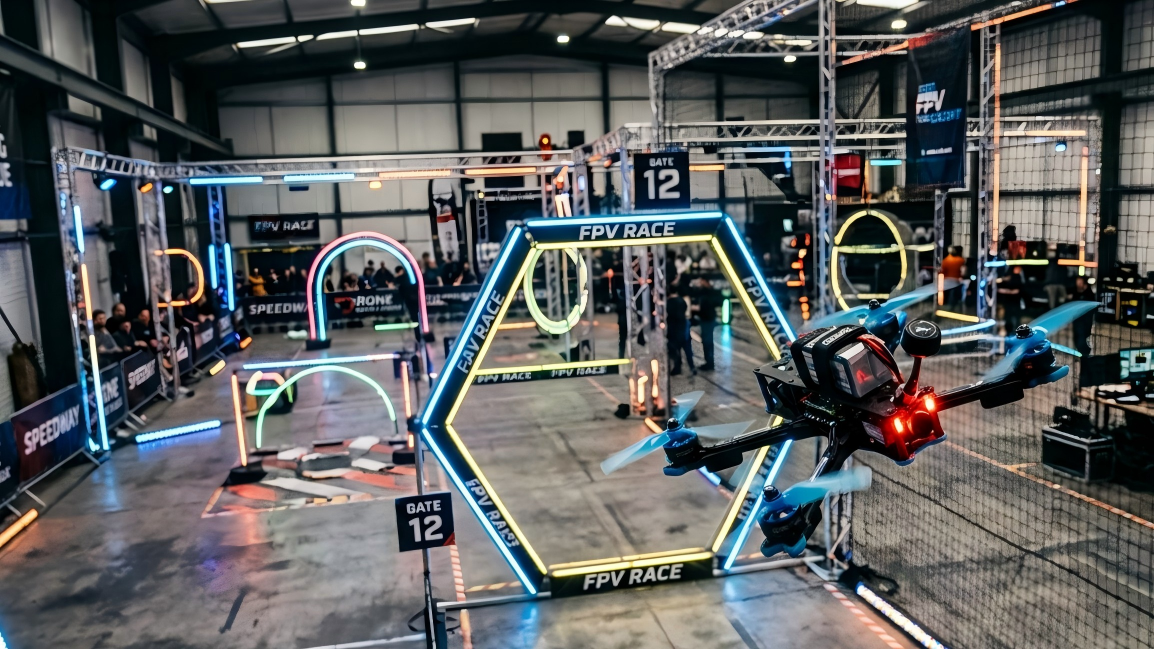
FPV (First Person View) drone flying has become one of the most immersive and exciting ways to experience flight. Instead of watching your drone from the ground, you see exactly what the drone sees in real time through a pair of FPV goggles. In 2026, FPV technology is more beginner-friendly than ever, with safer drones, better simulators, and more stable video systems. However, beginners often face confusion when deciding where to start and how to progress. One of the most important distinctions to understand is the difference between indoor and outdoor FPV flying.
This guide explains both environments in detail, including how they differ, what equipment you need, how to learn step by step, and how to safely progress from your first flight to confident freestyle or cinematic flying.
1. What Is Indoor and Outdoor FPV Flying?
The two types of FPV flying are vastly different despite using the same equipment.
Indoor FPV flying happens indoors in enclosed spaces like homes, garage spaces, gymnasiums, or warehouses. The indoor drones used for this kind of flight are usually small and light. Micro drones like Tiny Whoops or cinewhoops are popular. They fly slowly and safely due to high maneuverability indoors.
Outdoor FPV flying happens outdoors in open spaces like parks, forests, mountain ranges, or even urban settings. Larger drones are used here compared to indoor FPV flying drones. Drones that come under this size range include the 3-inch and 5-inch drones that are used for high-speed flights, wind resistance, tricks, and cinematic moves.

Fig. 1 Indoor FPV Flying
2. Key Differences Between Indoor and Outdoor FPV
Indoor flying is entirely different from outdoor flying.
Flying indoor is less intense and requires more caution. It does not involve any wind but has limited space to recover from errors. Every action counts and is highly critical. Indoor crashes happen often, yet they have minimal impact since drones used are lightweight and compact.
Flying outdoors is faster and involves many challenges. The environment provides vast areas where you can explore and experiment with various styles. Nonetheless, outdoor flying is uncertain; elements like wind, terrain, and distance affect flights.
Indoor flying is safer than outdoor flying for new pilots due to the use of smaller drones.

Fig. 2 Outdoor FPV Flying
3. Best Beginner Drones for Indoor Flying
Beginners for indoor FPV flights should concentrate on small and rugged drones. Most beginners use a Tiny Whoop, a very tiny drone with ducted blades for safety.
The Tiny Whoop is recommended for beginners because it is small, can fly safely indoors with people, and is sturdy enough to withstand crashes. They are easily repairable and reasonably priced. A little bigger indoor drones include 75mm Whoops and small Cinewhoops that are safer and less portable.
Indoor drones are made for stability rather than speed. They are the best drones for learning basic flight skills like hover flying and turning inside buildings.
4. Best Beginner Drones for Outdoor Flying
FPV outdoor drones are bigger and stronger compared to indoor drones. Most beginners will begin with 2.5-inch and 3-inch drones since they provide a perfect compromise between ease of handling and capabilities. They have a good stability level to train on and yet they are capable of flying outdoors in moderate winds.
As one improves their piloting skill, it is common practice to switch to 5-inch freestyle drones that are basically meant for FPV freestyle flight. They include high-speed, powerful drones that are able to perform stunts like doing flips, rolling, diving, power loops, among others.
Maintenance and repairs on an outdoor drone cost higher, but the thrill associated with them is far better.
5. How to Learn FPV Flying Step by Step
The optimal method of learning FPV flying in 2026 should include a logical progression.
Firstly, you can start learning by using an FPV simulator. Simulators provide opportunities to practice flying without the risk of damaging your drone. Muscle memory can be developed while training on simulators.
Secondly, you need to practice indoor flights using a Tiny Whoop. You will have enough time to get used to handling a real drone. Focus on making smooth movements, hovering, and navigating around objects.
Thirdly, make sure that your flight area is spacious and obstacle-free. It can be a field where the wind does not blow strongly. Pilots should master basic controls, flying in straight lines, and making slow turns.
Fourthly, you may try some freestyle or cinematic flights when you are ready to create your own unique style of flying.
6. Indoor FPV Flying Tips for Beginners
Flying inside demands patience and control. It is advisable for newcomers to practice indoor flying in spacious areas and not try confined spaces initially. Speed should always remain low in indoor flight, with smooth maneuvers emphasized over quick responses.
New pilots might want to use stabilization mode first before moving onto manual flying for better control. Objects prone to being broken must be removed from the flying zone since crashes could cause damage.
Bright lighting is recommended inside for better visibility in the FPV goggles.
7. Outdoor FPV Flying Tips for Beginners
New problems emerge when one ventures into outdoor flying, including wind, distance, and obstacles. Every drone user needs to practice in open fields that have light wind conditions.
Flying in open areas means that one needs to remain closer to where they took off to ensure they do not lose direction or signal. Maintaining a low altitude also ensures that one flies safely.
One must always be observant of his surroundings in relation to power lines, trees, and other people. Outdoor flying requires a lot of safety as drones can move fast and far.
8. Indoor vs Outdoor Learning Curve
Indoor flying is easier in terms of environment but harder in terms of space. Beginners crash more often indoors, but crashes are usually less damaging. Indoor flying is excellent for building precision and control skills.
Outdoor flying is more forgiving in terms of space but more challenging due to environmental factors. Once beginners gain basic control skills, outdoor flying becomes the best way to improve speed, confidence, and creativity.
The ideal learning path combines both environments. Indoor flying builds control, while outdoor flying builds freedom.
9. Common Beginner Mistakes
Many beginners make similar mistakes when starting FPV flying.
One common mistake is starting with a drone that is too powerful. Large drones are difficult to control indoors and can discourage learning.
Another mistake is skipping simulator practice. Simulators are one of the most effective ways to learn FPV flying safely.
Beginners also often try flying in windy outdoor conditions too early, which makes control difficult and increases crash risk.
Finally, many beginners expect one drone to work in all environments, but indoor and outdoor FPV require different types of equipment.
10. Conclusion
Indoor and outdoor FPV flying are not competing choices but complementary experiences. Indoor flying is the best place to learn control, precision, and confidence. Outdoor flying is where those skills turn into speed, creativity, and freedom.
Beginners in 2026 have more opportunities than ever to learn FPV safely and effectively. With the right progression—simulator training, indoor practice, and outdoor flying—any new pilot can develop strong skills and enjoy the full experience of FPV flight.

Leave a comment
This site is protected by hCaptcha and the hCaptcha Privacy Policy and Terms of Service apply.