
Many FPV pilots often ask: which type of frame is suitable for their drones? However, the answer is not simple as different frame materials offer different benefits to drone pilots. Your choice of frames will affect the performance and durability of the drone; its ability to withstand crash landings; and how it feels during flight.
We will focus on the characteristics of the three most popular types of FPV frames: carbon fiber, aluminum, and plastic. We will take a close look at the composition of these frames, along with their pros and cons. This article will guide you toward selecting the best frame for your needs.

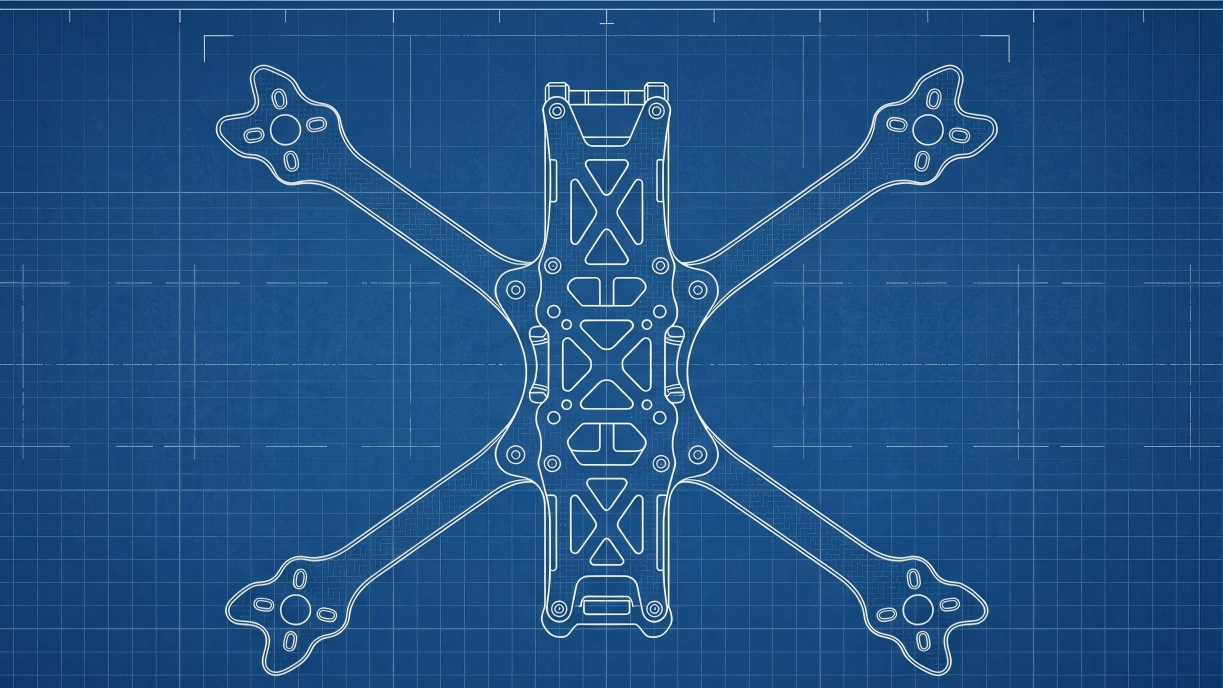
Fig. 1 FPV Frame Blueprint
What Makes A Good FPV Frame?
Before jumping into the materials themselves, it may help to have an idea of what makes a frame good. First, a good FPV drone frame is light, durable, rigid, but able to withstand small shocks. Finally, it must fit your motors, electronics, and accessories. The choice of material will affect all of these, and having some knowledge about mechanical properties will prevent accidents or bad flight results.
1. Carbon Fiber: The High-Performance Standard
Carbon fiber is the go-to material for most FPV drones 3 inches and larger, especially racing and freestyle models. Why? Because it is extremely lightweight and rigid, providing precise control during aggressive maneuvers. A typical 5-inch carbon fiber frame weighs between 70 and 120 grams, making drones agile and highly responsive. Its stiffness reduces flex, ensuring smooth rolls, dives, and flips, even at high speeds.
Understanding the Properties of Carbon Fiber
To see why carbon fiber is so popular, let’s look at its key mechanical and physical characteristics:
|
Property |
Typical Value |
|
Tensile Strength |
Up to 3000 MPa |
|
Density |
~1.6 g/cm³ |
|
Specific Strength |
>1800 MPa·cm³/g |
|
Impact Toughness |
~20 kJ/m² |
|
Thermal Stability |
Up to 150°C (depending on resin system) |
|
Electrical Conductivity |
High (anisotropic) |
|
Corrosion Resistance |
Excellent (non-metallic surface) |
These properties give carbon fiber frames a high strength-to-weight ratio, which is why they are favored by competitive pilots.
Advantages and Limitations
Carbon fiber frames excel in speed, precision, and agility, making them ideal for racing and freestyle flying. Modular designs allow arms or plates to be replaced individually after a crash, minimizing repair costs.
The main limitation? Brittleness. Extreme impacts—like hitting concrete or thick tree branches—can cause fractures rather than bends. In addition, high-quality carbon fiber frames are generally more expensive, costing anywhere from $50 to $150 for a 5-inch setup.
Typical Components and Enhancements
Frequently, popular carbon fiber frame versions consist of carbon fiber sheets with standoffs or screws made from CNC aluminum in order to make them more robust. Additionally, frames can be equipped with TPU shock absorbers to ensure higher survival rate in case of a crash.

Fig. 2 FPV Frame Kit
2. Aluminum: Durable and Heat-Resistant
Aluminum frames are heavier than carbon fiber—usually around 150–200 grams for a 5-inch frame—but they make up for it in durability and heat management. They bend rather than break, absorbing impact energy and protecting electronics during crashes. Aluminum frames are a popular choice for cinematic drones or long-range rigs where stability and reliability matter more than raw speed.
Key Properties of Aluminum
Most FPV frames use 6061 or 7075 aluminum alloys. Here’s what makes them tick:
|
Property |
Typical Value |
|
Tensile Strength |
6061: 240–570 MPa / 7075: 570–700 MPa |
|
Density |
2.7 g/cm³ |
|
Impact Toughness |
30–40 kJ/m² |
|
Thermal Conductivity |
150–200 W/m·K |
|
Corrosion Resistance |
Good (anodized) |
These characteristics explain why aluminum frames can carry heavier payloads and stay cool even with high-powered motors.
Advantages and Limitations
Aluminum frames resist major damage and handle heavy loads well, making them suitable for aerial cinematography or drones carrying cameras. They also dissipate heat efficiently, which can extend component lifespan during long flights.
However, the extra weight slightly reduces agility, and 7075 alloy frames can be expensive due to machining costs.
Typical Components and Design Details
The aluminum frame may incorporate CNC-cut motor mounts, standoffs, and reinforcements. Some pilots combine the two metals in an aluminum alloy structure, using 7075 in highly stressed regions and 6061 elsewhere. The frame assembly is held together by high-strength screws with 10.9 or 12.9 ratings.
3. Plastic: Affordable and Flexible
Plastic frames are most common in sub-3-inch drones and beginner FPV kits. They are light, inexpensive, and flexible, making them perfect for novice pilots who are prone to crashes. A typical micro drone weighs between 80 and 150 grams.
Key Properties of Plastic
Common plastics include PP, ABS, PLA, and flexible TPU. Their properties include:
|
Property |
Typical Value |
|
Tensile Strength |
50–90 MPa |
|
Density |
0.9–1.4 g/cm³ |
|
Impact Toughness |
5–25 kJ/m² |
|
Thermal Stability |
80–120°C |
|
Flexibility |
High (TPU) / Medium (ABS/PLA) |
Advantages and Limitations
The plastic frame is tolerant; it can withstand small crashes and be easily repaired and replaced. Plastic frames can be modified easily, especially in combination with 3D printing technology. The price to pay for that, however, is decreased precision of flight and lack of stiffness in comparison to carbon fiber and aluminum. It is also prone to deformation over time due to stress.
Components and Frame Modifications
Micro drones usually use a body and accessories made from 3D printed materials like TPU, ABS, or PLA. Hybrid versions combine 3D printed frames with carbon fiber plates in areas of high stress.
How to Choose the Right FPV Frame
Selection of the best frame is dependent on flight styles, costs, and maintenance. The following table highlights the main considerations for each frame:
Carbon Fiber: Suitable for racing or freestyle flights where agility and maneuverability are the most important attributes. Expensive and fragile when crashing.
Aluminum: Recommended for drone carrying heavy loads or used for cinematic purposes due to its durable nature and crash protection features. Slightly heavier.
Plastic: Best for novice pilots or micro-drones as it is flexible, cheap, and can absorb crashes; but less stiff and agile than other frames.
Hybrid Solutions: Pilots often use different types of frames to get advantages from both material types. For example, carbon frames can be equipped with TPU parts, aluminum can be a combination of various alloys, while plastic micro-drones can use carbon parts.
Conclusion
Knowing the physical attributes, weight, pricing, and usual materials used for each type of frame will guide you better when choosing one. Carbon fiber gives you speed and accuracy, aluminum gives you strength and stability, and plastic gives you flexibility and budget-friendly options. You need to match the material with your flying needs, whether it is for racing, freestyle, movie making, or just learning how to fly.

Leave a comment
This site is protected by hCaptcha and the hCaptcha Privacy Policy and Terms of Service apply.