
For any First-Person View (FPV) drone pilot, flight time is one of the most valuable resources in the hobby. Whether you're chasing a drift car, filming cinematic mountain footage, practicing freestyle tricks, or flying long-range missions, every extra minute in the air counts.
Optimize Your Drone for Efficiency
Many pilots focus solely on battery capacity, but overall aircraft efficiency often has a greater impact on your total flight time.
Reduce Weight
Every additional gram on your aircraft requires extra thrust, which directly spikes the current draw. You can shed unnecessary weight by opting for lightweight frames, minimizing heavy TPU accessories, cutting down long wiring runs, and using compact antennas. Additionally, utilizing smaller action cameras or naked camera systems will dramatically lighten the load. A lighter drone generally flies longer and places far less stress on the battery cells.
Match Motors and Propellers Correctly
Motor KV, propeller pitch, and battery voltage must work together in harmony to maximize efficiency. For longer flight times, it is wise to use lower-pitch propellers or even consider bi-blade props for cruising, as they encounter less aerodynamic resistance than tri-blades. You should avoid overly aggressive propeller setups entirely and ensure your motor KV is properly matched to your battery voltage. An inefficient motor-prop combination simply wastes energy and generates excess heat.
Maintain Your Equipment
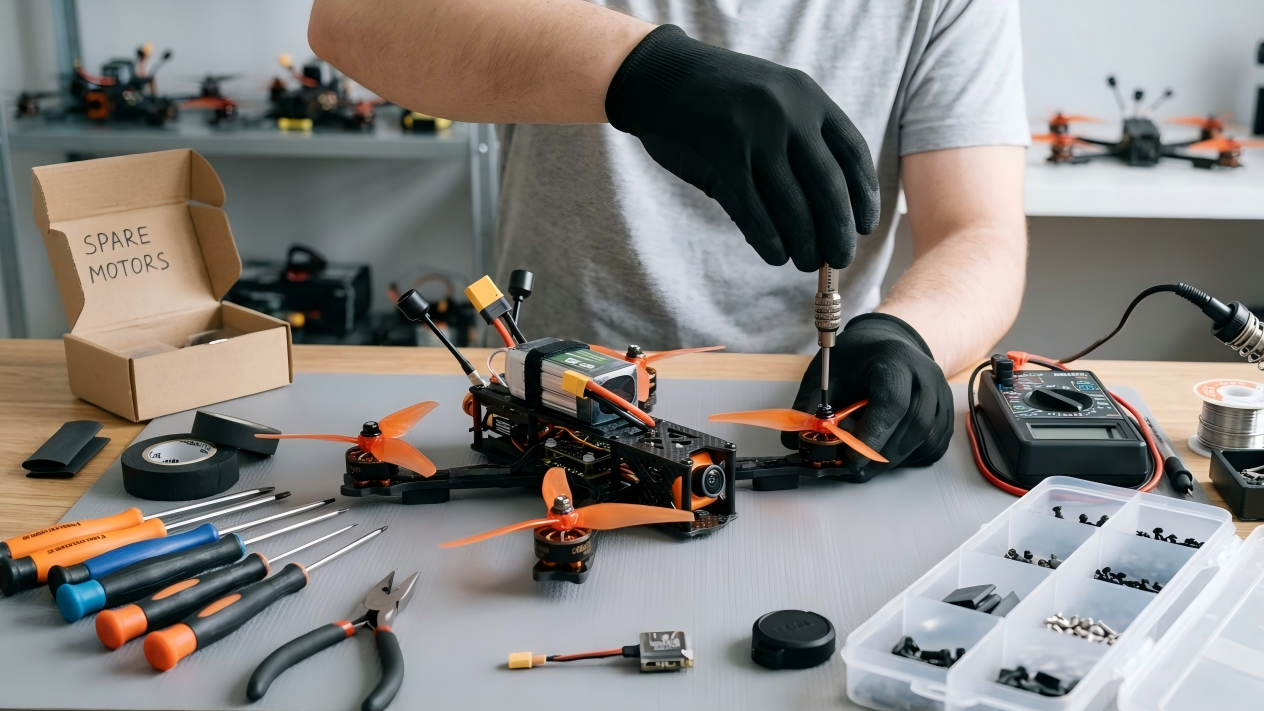
Mechanical inefficiencies directly drag down your battery performance. You should regularly inspect your propellers for minor bends, check motor bearings for smoothness, ensure frame hardware is secure, and monitor ESC temperatures and electrical connections. Bent props, dirty motors, and worn bearings force the system to draw more current to maintain stability, directly shortening your flight times.

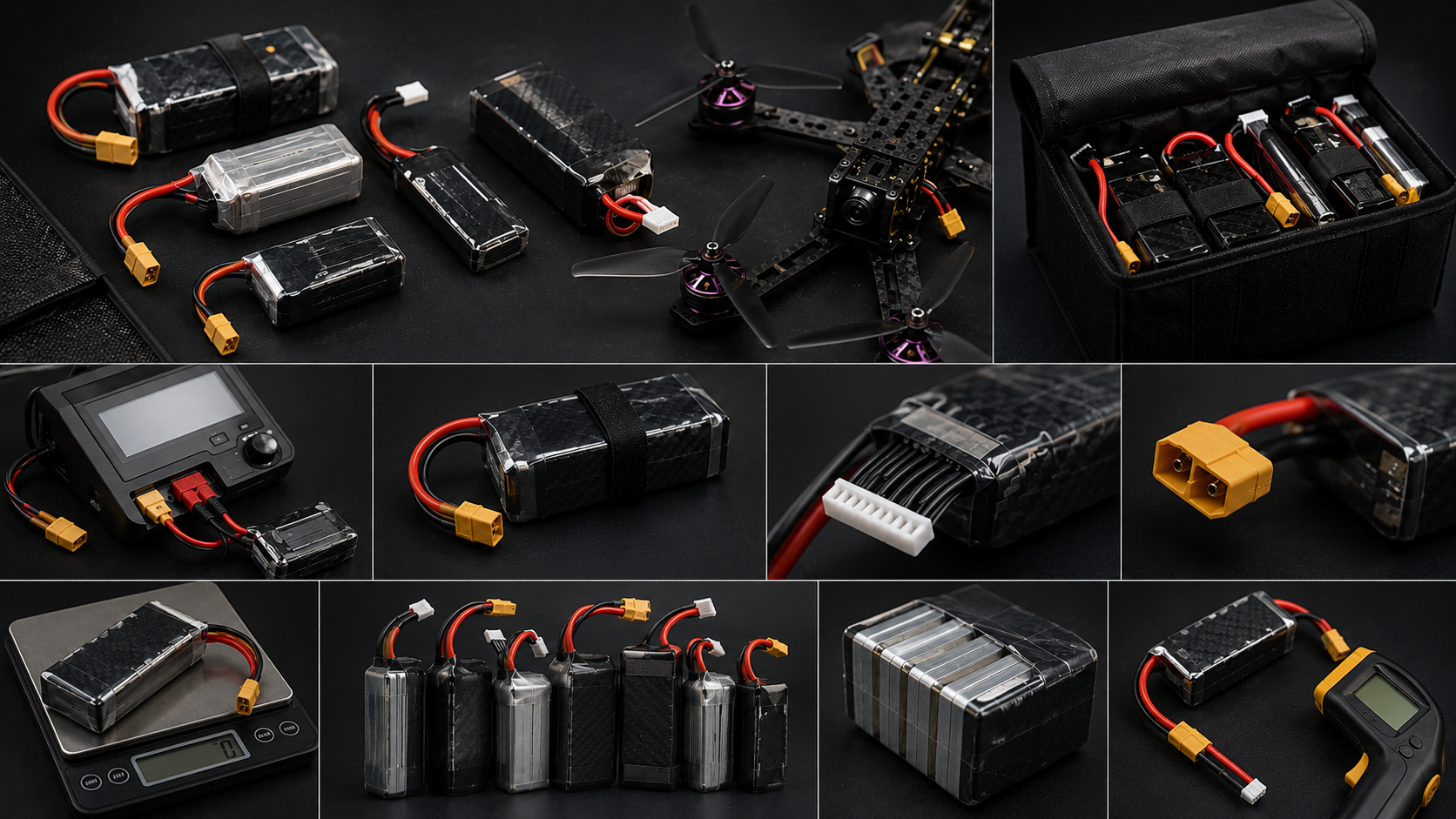
Fig. 1 FPV Drone Batteries
Fly Smarter, Not Harder
Pilot behavior has a massive, direct impact on daily battery consumption. Smoothness in the sticks is often the easiest way to gain extra time in the air.
Avoid Constant Full-Throttle Punch-Outs
Every full-throttle climb demands massive current from the battery, which induces heavy voltage sag and rapid heat buildup. This behavior accelerates cell degradation and slashes your immediate flight time. While occasional punch-outs are an exciting part of FPV flying, constantly pinning the throttle at maximum dramatically reduces the longevity of your battery packs.
Use Momentum Efficiently
Experienced pilots often rely on kinetic momentum rather than continuous brute force from the motors. You can save substantial energy by carrying speed fluidly through turns, gliding during descents, and reducing the throttle to a minimum during the middle of flips and rolls. Avoiding constant, unnecessary micro-throttle corrections keeps the current draw low and smooth, which also happens to result in more cinematic, fluid footage.
Optimize Your Tune
A poor Betaflight tune wastes immense amounts of energy through micro-oscillations. If you notice excessive motor heat, high gyro noise, or visible wobbles, your PID values may be overly aggressive. An efficient, clean tune allows the motors to work less to stabilize the craft, saving precious battery capacity while maintaining excellent flight characteristics.

Fig. 2 Max FPV Battery Life
Avoid Deep Discharges
One of the fastest ways to permanently shorten a battery's lifespan is over-discharging the cells. You should strictly monitor your telemetry and land at approximately 3.5–3.6V per cell under load, which usually results in a healthy 3.7–3.8V resting voltage after the pack has recovered on the ground.
You should avoid dropping below 3.3V per cell under load and never allow cells to fall below 3.0V under any circumstance. Many pilots chase an extra 30 seconds of flight time at the end of a pack, but repeatedly draining batteries too deeply causes internal damage and ruins their performance. Landing slightly earlier keeps the internal chemistry healthy and rewards you with a much longer overall battery lifespan.
Charge Batteries Correctly
Proper charging habits on the bench play a major role in how safely and effectively your batteries perform in the sky.
Use Balance Charging
You should always use balance charging rather than fast charging, as it ensures every individual cell in the pack reaches the exact same voltage. This practice yields better safety during operation, improves flight performance by keeping cell output even, reduces long-term cell imbalance, and extends the total life of the battery.
Charge at 1C Whenever Possible
A conservative charging rate minimizes thermal and chemical stress on the cells. This means charging a 1300mAh pack at 1.3A, a 1500mAh pack at 1.5A, or a 2200mAh pack at 2.2A. Although many modern batteries support higher charge rates, sticking to a 1C rate generally preserves the internal chemistry and extends overall operational lifespan.
Let Batteries Cool Before Charging
Charging a hot battery increases internal chemical stress and accelerates degradation. After each flight, immediately remove the battery from the drone and allow it to cool down to room temperature. You should only begin the charging process once the pack's internal temperature has fully stabilized, a simple habit that significantly improves long-term battery health.
Store Batteries Properly
Storage practices often have a greater effect on battery lifespan than the actual flying itself. Batteries should never be left fully charged or fully discharged for extended periods, as both states cause rapid chemical degradation.
The ideal storage voltage for Lithium Polymer batteries is strictly between 3.80V and 3.85V per cell. This specific range minimizes chemical stress and preserves original capacity. You must avoid leaving batteries fully charged for days at a time, and never store them inside hot vehicles or in direct sunlight. Most modern balance chargers include a dedicated Storage Mode that automatically adjusts the voltage to this optimal level, and you should utilize it whenever your packs won't be flown within the next day or two.
Monitor Battery Health
A battery can easily appear normal on the outside while slowly degrading internally, making regular health checks essential.
Check Internal Resistance (IR)
Internal resistance is one of the best indicators of a battery's true condition, and most modern smart chargers can display this metric during the charging cycle. A value of 1–8 mΩ per cell indicates excellent health, while 8–15 mΩ per cell is considered normal for used packs. Once the resistance climbs to 15–20 mΩ per cell, the battery is aging, and anything above 20 mΩ should be considered for retirement. Higher internal resistance leads to increased voltage sag, more heat generation, reduced power performance, and noticeably shorter flight times.
Inspect for Physical Damage
You should visually inspect your packs regularly and immediately retire batteries that show signs of puffing or swelling, crushed corners, exposed foil, severe dents, or large cell voltage imbalances that won't correct during balancing. A physically damaged battery is a severe safety hazard and is never worth risking your aircraft or your surroundings.
Don't Ignore Environmental Conditions
Ambient temperature plays a massive role in battery performance because chemical reactions naturally slow down in extreme conditions.
Cold Weather Flying
Cold batteries suffer from increased internal resistance, which triggers severe voltage sag, reduced capacity, and significantly shorter flight times. When flying in winter, it is crucial to keep your batteries warm before launch by storing them in insulated containers or inside a coat pocket close to your body. Additionally, you should avoid aggressive throttle moves immediately after takeoff, allowing the battery to warm up gradually through gentle hovering before demanding maximum power.
Hot Weather Flying
Excessive heat accelerates internal battery degradation and can lead to dangerous thermal runaway. When flying in hot summer weather, always move your batteries into the shade immediately after landing and allow them to cool down completely before putting them on a charger. You should monitor temperatures carefully, and if your batteries consistently exceed 60°C (140°F) during a flight, you should investigate your drone's weight or motor tune immediately.
Build a Battery Management Routine
Professional pilots treat their power sources like critical flight components by establishing strict operational habits. Before every flight, make it a rule to check individual cell voltages, inspect the main XT60 and balance connectors, and verify overall pack condition.
Immediately after every landing, you should check the battery temperature by hand, note the final resting voltage on your OSD, and look for any new physical damage from crashes. On a monthly basis, take the time to review the internal resistance of your entire fleet, inspect the balance leads for fraying, evaluate overall pack performance, and decisively retire aging batteries. A simple maintenance routine helps identify hidden problems before they turn into expensive failures.
Final Words
Maximizing FPV drone battery life requires more than simply buying larger battery packs. True efficiency comes from combining smart hardware choices, smooth flying techniques, disciplined charging habits, and proper battery maintenance.

Leave a comment
This site is protected by hCaptcha and the hCaptcha Privacy Policy and Terms of Service apply.