
Drones are now being used in an increasingly wide range of applications. In addition to common types of drones, a new term—“FPV drone”—has emerged. What kind of drone is this? In what scenarios is it used? And how does it differ from ordinary drones? These are questions that many people are curious about.
Many people are probably already familiar with FPV drones, but for beginners, the term “FPV drone” is still quite new. What types and brands of FPV drones are available, and as a beginner, how should you choose the right brand and type? Let’s take a look together!
What Is an FPV Drone?
Before we dive into everything else, we need to understand what an FPV drone is. FPV stands for First Person View. With traditional drones, you have to keep your eyes on the drone at all times to control it; at longer distances, you need to use a screen to monitor its movements.
However, as technology continues to advance, FPV drones have made it possible for “the drone’s camera to become your eyes.” Through FPV goggles, you can experience the sensation of flying firsthand. This is what’s known as the first-person view: the drone’s perspective becomes your own, allowing you to fly through flowers, grass, and trees, and look down upon mountains, rivers, and lakes.

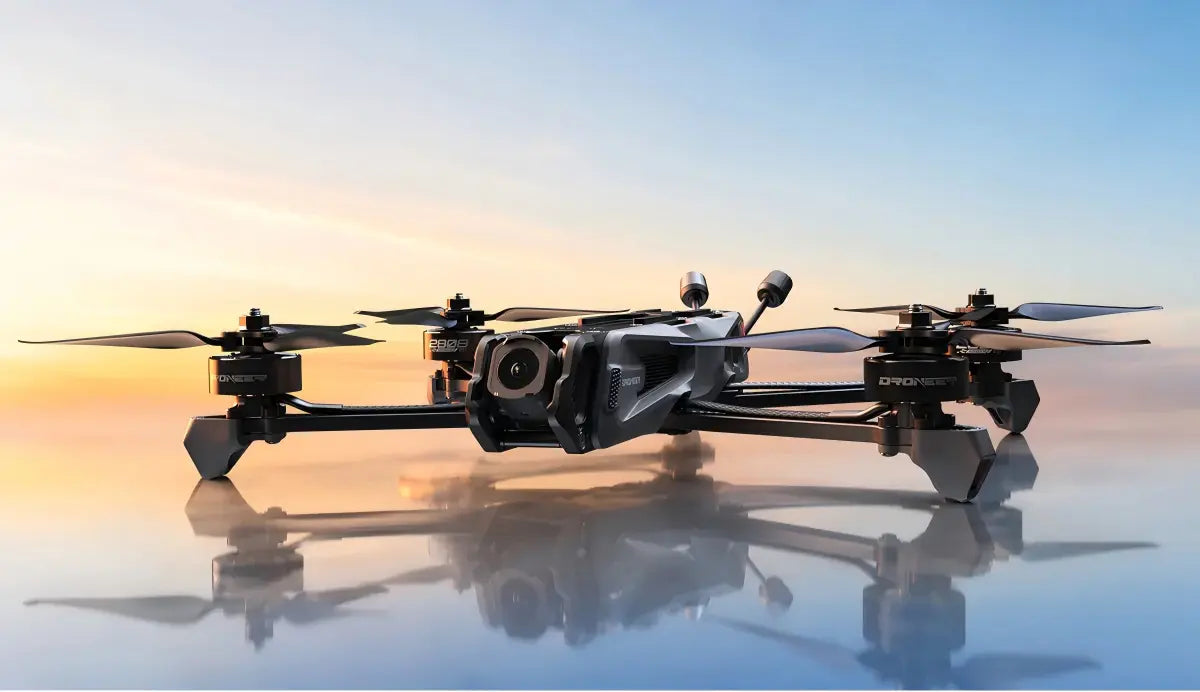
Droneer FPV Drone
What Parts Make Up an FPV Drone?
Unlike traditional drones, which come ready to fly right out of the box—complete with a battery, remote controller, and other components—FPV drones are different. While some FPV drones do offer “out-of-the-box” flight options, most are of the BNF (Bind-N-Fly) or PNF (Program-N-Fly) types, which highlight the unique flexibility that FPV drones offer. So, what components should a ready-to-fly FPV drone include?
Airframe
The structural foundation that holds all components together and determines the drone's size and layout.
-
FPV Drone Frame:
A FPV drone frame consists of two main parts: the fuselage and the arms. This forms the overall structural framework of the drone, which comes in various configurations, such as Loop, H, X, Hybrid-X, or BOX types. It also comes in different sizes, referred to as wheelbase—the diagonal distance between motors—with options ranging from 2 inches to 7 inches.
Droneer offers 2.5-inch Loop-frame FPV drones, as well as 5-inch and 7-inch X-frame FPV drones for you to choose from. These options meet your needs for different sizes and frame types, providing a wide variety of choices for your flights.
Power System
Generates thrust and powers the drone. Motors spin the propellers, ESCs regulate motor speed, and the battery supplies electrical power.
-
ESC (Electronic Speed Controller):
The electronic speed controller (ESC) is responsible for controlling the rotational speed of the motors in an FPV drone. The ESC receives throttle commands from the flight controller and drives the brushless motors at the desired speed. A high-quality ESC is key to achieving a stable and smooth flying experience.
Among Droneer's FPV drones, both the Droneer X701 and X501 are equipped with 4-in-1 ESCs, which enable centralized weight distribution, save space, and simplify wiring.
-
Motor:
Motors are part of the power system of FPV drones and serve as the core component connecting the electronic control board, battery, and propellers. They directly determine the drone’s overall thrust performance, response speed, and flight efficiency. Brushless motors are the preferred choice for modern FPV drones, as they are more durable and deliver greater power.
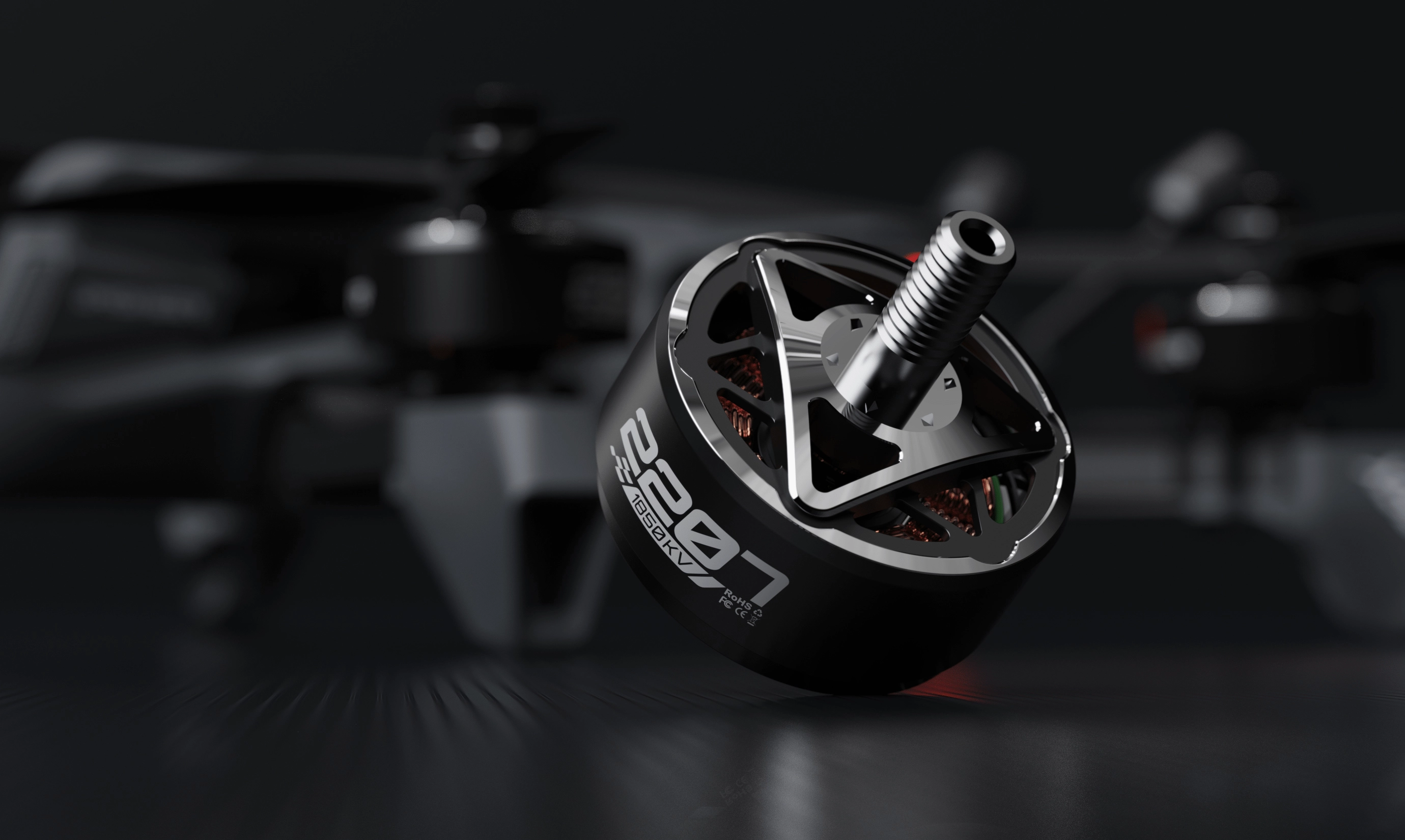
Droneer X501 Brushless Motor
FPV drones with different frame sizes and propeller sizes may require motors of different sizes and KV ratings. All FPV drones from Droneer come equipped with motors that are tailored to their specific size and intended use, allowing them to perform at their best.
-
Propeller:
FPV drone propellers are key components for keeping multirotors airborne. FPV drone propellers are typically defined by three main specifications: size, pitch, and number of blades. FPV drone frames are usually classified by propeller size—specifically, the largest propeller size they can accommodate.
-
Battery:
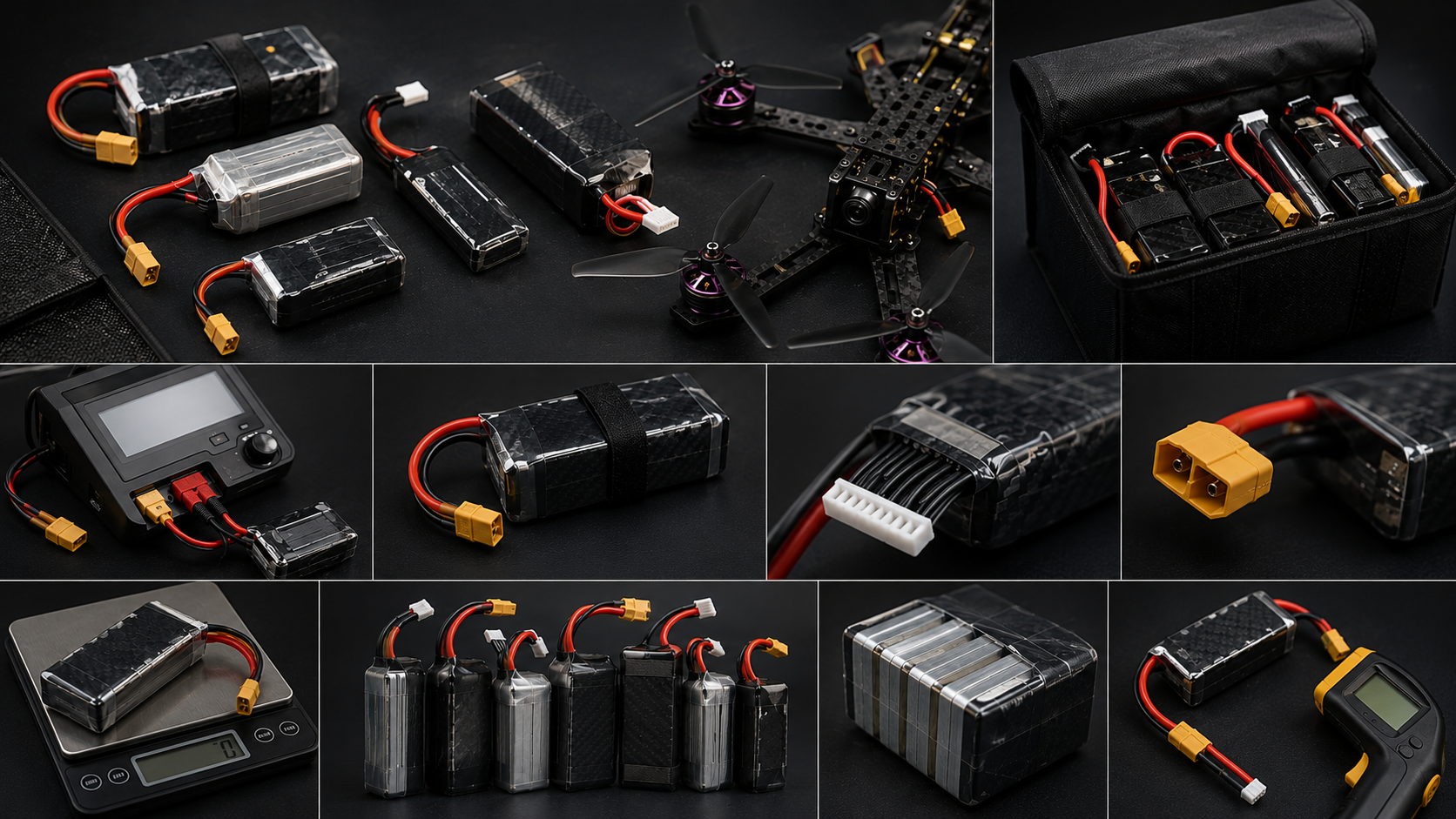
Batteries are the power source for FPV drones. Common battery types used in FPV drones include: lithium polymer (LiPo) batteries, high-voltage lithium polymer (LiHV) batteries, and lithium-ion (Li-Ion) batteries.
When selecting a battery for an FPV drone, it is important to carefully consider the voltage (cell), battery capacity, discharge rate, as well as size, weight, and compatibility. All of these factors affect the performance of the FPV drone.
Flight Control System
Controls flight stability and navigation. The FC processes pilot inputs and sensor data, while GPS enables positioning, Return-to-Home, and speed/location information.
-
Flight Controller:
As the name suggests, it functions as a flight control system similar to the brain, responsible for stabilizing the aircraft’s operation and ensuring precise flight maneuvers. Physically, it consists of a circuit board equipped with sensors, which may include gyroscopes, accelerometers, barometric pressure sensors, and magnetometers.

STM32 H Series Flight Controller
Similarly, there are many types of flight controllers, including the F4, F7, and H7 flight controllers based on the STM32 chip, as well as the AT32 chip, which has become popular in recent years. The flight control chips used in Droneer FPV drones are the Droneer C2501 - F722 AIO and the Droneer X501/X701 - H743. These are all relatively advanced flight control processors that ensure flight stability.
-
GPS:
Some long-range FPV drones are equipped with GPS, enabling rapid satellite acquisition and precise positioning to ensure stable flight and worry-free exploration.
Both the Droneer X501 and X701 FPV drones are equipped with the GPS M10G 5883.
FPV Video System
Captures, transmits, and displays the live video feed for immersive first-person flying.
-
FPV Camera:
The camera is typically located at the front of an FPV drone, serving primarily as its “eyes” to capture real-time video and transmit it to the pilot’s goggles or monitor. FPV cameras come in two types: digital and analog. Both types have their own advantages and disadvantages.
When it comes to cameras, the Droneer FPV drone offers a wide variety of options. The main choices include the DJI O4 Pro’s HD digital camera and the FOXEER Micro Toothless 2’s analog camera. In addition, to accommodate DIY pilots, a PNP version without a camera is also available.
-
Video Transmitter (VTX):
VTX transmits video from the camera via radio frequency to the pilot's goggles or monitor. Different systems use either analog or digital transmission; analog transmission is simple and has low latency, while digital transmission provides a clearer image and allows for recording in high-definition resolution.
-
Antenna:
The antenna is used to transmit and receive radio and video signals, and it is a key factor in determining the range and signal strength of your FPV system.
The Droneer FPV drone is equipped with an O4 Pro antenna for digital video transmission and a Maple 11cm 5.8GHz analog antenna for analog video transmission, enabling more precise signal transmission.
-
FPV Drone Goggles:
FPV drone goggles allow you to view the live video feed from the drone. The type of FPV system you use will affect your choice of goggles; the four main FPV systems are Analog, DJI, HDZero, and Waiksnail Avatar.
Note: None of the Droneer FPV drones come with goggles; you'll need to purchase them separately.

DJI O4 Pro FPV Video System
Radio Control System
Allows the pilot to control the drone. The remote controller sends commands, and the receiver relays them to the flight controller.
-
Receiver:
The pilot's controller sends control inputs to the drone's receiver. This link controls throttle, pitch, roll, and yaw, among other functions. It differs from the video link, which transmits video, whereas this link is used to transmit control signals.
Droneer FPV drones are primarily equipped with ELRS 915/2.4 receivers, TBS 915 receivers, and O4 Pro receivers. Every FPV drone, including the Droneer C2501, offers these options to meet different needs.
-
Remote Controller:
It is a tool used by pilots to operate FPV drones, allowing them to control the drone's flight, including its direction and acrobatic maneuvers, among other operations.
Receiver of FPV Drones
What is the Difference Between FPV Drones and Traditional Drones?
If you are new to the drone industry, you might wonder why FPV drones exist and how they differ from conventional drones.
Unlike traditional drones, which rely on line-of-sight control, FPV drones place you “inside” the cockpit. Every twist, turn, and flip feels like you are flying rather than just controlling a machine. This immersive perspective has revolutionized drone racing, freestyle aerial maneuvers, and cinematic filming in challenging environments.
| Feature | FPV Drone | Normal Drone (GPS/Camera) |
|---|---|---|
| Flight View | Immersive first-person view through goggles | Third-person stable view via phone or controller screen |
| Camera Quality | Real-time low-latency FPV feed, lower resolution for recording (unless using HD systems like DJI O3) | High-resolution stabilized cameras (4K–8K) optimized for photography and video |
| Flight Control | Manual or semi-manual; requires skill, no GPS stabilization | GPS-assisted, automated flight modes, stable hover |
| Maneuverability | Extremely agile, capable of tricks and freestyle | Limited maneuverability, focused on smooth cinematic flight |
| Battery Life | Shorter (3–8 minutes for FPV racing drones; 15–20 minutes for cinematic FPV) | Longer (20–45 minutes depending on model) |
| Cost | Can be cheaper to build DIY, but requires additional gear (goggles, radio, batteries) | Higher upfront cost, but ready-to-fly with built-in features |
| Learning Curve | Steep, requires practice in simulators or with training drones | Easy, beginner-friendly, suitable for all skill levels |
| Use Cases | Racing, freestyle, cinematic “through-the-gap” footage | Photography, videography, mapping, surveying |
Advantages of FPV Drones
Immersive flight experience
When flying an FPV drone, you can experience every dive and every turn through the FPV goggles, as if you were flying through the sky yourself. The beautiful scenery—the land, mountains, and lakes—seems to unfold right before your eyes. This is an experience that traditional drones cannot provide, and it is one of the unique advantages of FPV drones.
High Speed and Agility
Built for performance, FPV drones offer rapid acceleration, sharp turns, and acrobatic maneuvers that traditional camera drones cannot match.
Stunning Cinematic Footage
FPV drones can capture dynamic, low-altitude, and high-speed shots, making them a popular choice for filmmaking, sports, and commercial video production.
Highly Customizable
Pilots can easily upgrade or replace components such as the frame, motors, flight controller, camera, and VTX to suit racing, freestyle, or long-range flying.
Some Components of FPV Drone can be Replaced
Versatile for Different Applications
From racing and freestyle to aerial photography, training, and industrial inspections, FPV drones are suitable for a wide range of recreational and professional uses.
Application Scenarios for FPV Drones
Thanks to the advantages mentioned above, FPV drones have found widespread application across various industries.
1. Cinematography and Content Creation: FPV drones are ideal for capturing dynamic cinematic footage. Their speed and agility allow them to fly through tight spaces, track fast-moving subjects, and create unique camera angles that are difficult to achieve with traditional drones.
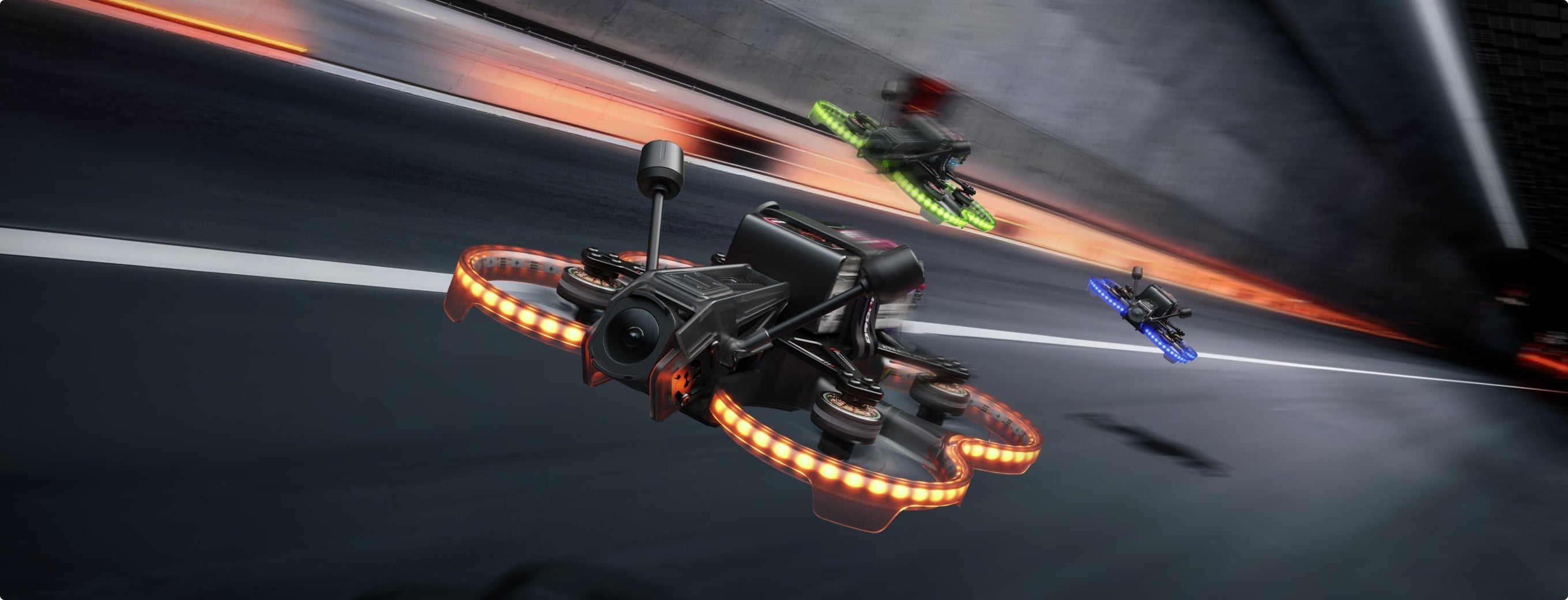
2. FPV Racing: FPV drones are built for speed and agility, making them the top choice for competitive drone racing on indoor and outdoor courses.
3. Industrial Inspections: In industrial settings, FPV drones can perform the tasks of inspectors. For example, they can assist in monitoring bridges, wind turbines, confined spaces, and industrial sites—places that pose high safety risks or are inaccessible or difficult for humans to reach.
4. Search and Rescue Operations: In search-and-rescue scenarios, some micro Whoops drones can search for and rescue people in collapsed rubble. They are more agile than traditional drones and can play a critical role in situations where search and rescue operations are particularly challenging.
5. Agriculture and Land Monitoring: Some long-range FPV drones can monitor large areas of farmland and are more affordable than traditional drones.
6. Military and Defense:: FPV drones are also used in specialized fields where real-time aerial perspectives and flexible navigation are required. Their compact design and maneuverability allow them to operate effectively in complex environments.
Cinematography and Content Creation with FPV Drone
How To Choose Your Fisrt FPV Drone?
Step 1: Start with your main use case
- Indoor practice: choose a small tiny whoop.
- Smooth video near people or objects: choose a cinewhoop.
- Outdoor freestyle: choose a 5-inch freestyle drone.
- Avoid long-range or heavy-lift drones as your first FPV drone.
Step 2: Buy a ready-to-fly or bind-and-fly kit
- Best for beginners because setup is simpler.
- Avoid building from parts unless you already understand soldering, firmware, motors, ESCs, and radio systems.
Step 3: Choose digital or analog video
- Analog: cheaper, lighter, good for learning.
- Digital: clearer image, more expensive, usually better for filming.
Step 4: Prioritize durability over speed
- Look for prop guards if flying indoors.
- Choose a common frame size with easy-to-find replacement parts.
- Expect crashes while learning.

2.5 inch FPV Drone
Step 5: Check controller and goggles compatibility
- Make sure the drone, radio controller, and goggles use compatible systems.
- Popular radio links include ELRS and Crossfire.
- Video systems must also match: analog goggles for analog drones, digital goggles for digital drones.
Step 6: Start small with batteries and spares
- Buy 4-6 batteries.
- Get extra propellers, a charger, and basic tools.
- For outdoor drones, consider spare arms, motors, and antennas.
Step 7: Practice in a simulator first
- Use your actual controller if possible.
- Learn throttle control, turning, landing, and recovery before flying a real drone.
Step 8: Avoid overbuying
- Your first drone should be easy to repair, affordable, and forgiving.
- Upgrade later once you know whether you prefer racing, freestyle, cinematic flying, or long-range flight.
Conclusion
FPV drones are becoming increasingly popular. In this article, we provide a detailed overview of what FPV drones are, their components, advantages, and a wide range of application scenarios, and we conclude with some purchasing recommendations. For beginners, gaining a thorough understanding of these aspects before making a purchase can help you quickly identify your needs and make the best buying decision based on those needs.

Leave a comment
This site is protected by hCaptcha and the hCaptcha Privacy Policy and Terms of Service apply.